
Onboard Microchannel Carbon Capture: Sailing Toward a New Blue Ocean in Zero-Carbon Shipping
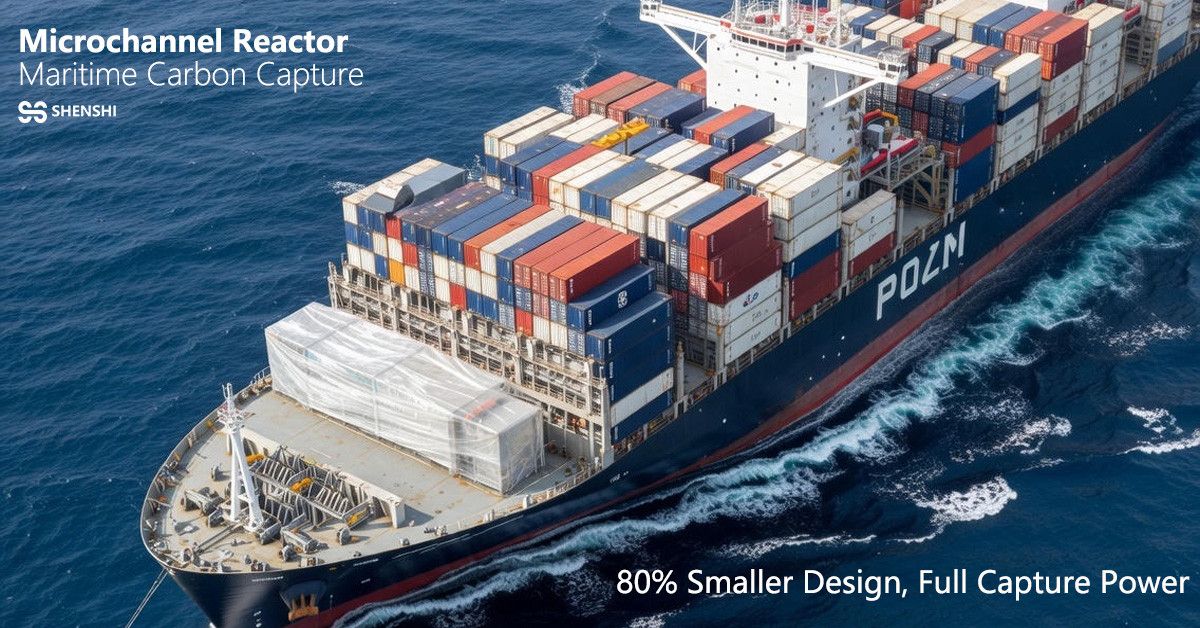
The global shipping industry accelerates its green transition. Maritime carbon emissions account for about 3% of global totals. Decarbonization pressure is immense. Onboard carbon capture, especially microchannel technology, emerges as a key solution. It is compact and modular, ideal for limited ship space. Hangzhou Shenshi Energy Conservation Technology Co., Ltd. drives this innovation, opening new paths for zero-carbon shipping.
Policy Drivers: Regulations Accelerate Maritime Decarbonization
Policies drive shipping emission reductions. National, international, and regional rules layer pressures, forcing upgrades.
National Level
China targets carbon peak by 2030 and neutrality by 2060. Shipping emits over 1 billion tons annually, peaking at 1.45 billion by 2030.
International Level
IMO advances net-zero to around 2050. 2030 goals: 40% carbon intensity cut, 20% total reduction.
Regional Level
EU Green Deal demands zero-emission berthing by 2030. Shipping joins EU ETS, quantifying costs.
Short-Term Impacts
IMO's EEDI, EEXI, CII form a closed loop. Poor ratings trigger fixes. EU ETS from 2024 adds ~1.4 million euros per ship yearly. Owners seek viable marine CCS options.
Market Landscape: Existing Fleet Under Heavy Pressure
Aging vessels face huge compliance gaps.
- 64% capacity delivered pre-2015, lacking energy-saving designs.
- Average age 13.6 years; 60% over 10 years.
Carbon pricing reverses economics. Old VLCCs (2000-built) add ~$2.8 million yearly costs. New eco-ships cut emissions 20-33%.
Shipboard CCS market booms. Total decarbonization needs $1-1.9 trillion. CCS share (10%) reaches hundreds of billions. Vital supplement in 2025-2040 transition.
Technology Pathways: Microchannel Reactor Leads Marine CCUS
Post-combustion capture options:
| Technology | Advantages | Ship Suitability Drawbacks |
|---|---|---|
| Pressure Swing Adsorption | - | Bulky, low efficiency |
| Cryogenic Distillation | - | High energy, high concentration only |
| Membrane Separation | - | Low flux, high cost |
| Amine Absorption | Mature, high efficiency | Traditional towers bulky, sway-sensitive |
(Post-combustion capture options)
Microchannel reactor breaks bottlenecks. Amine-based, uses vacuum diffusion welding. Integrates reactor and heat exchanger. Volume reduces 80%. Millisecond gas-liquid contact, sway-resistant.
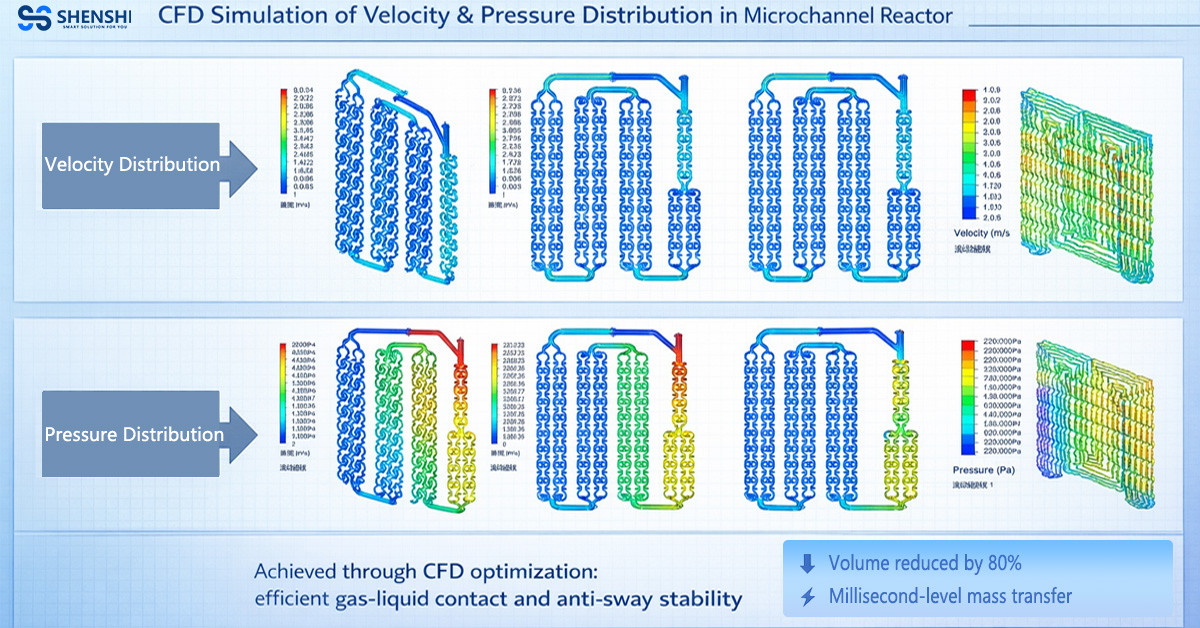
Diffusion Bonding Benefits:
- Strength 95% of base material.
- No filler, controllable corrosion.
- No heat-affected zone, minimal stress.
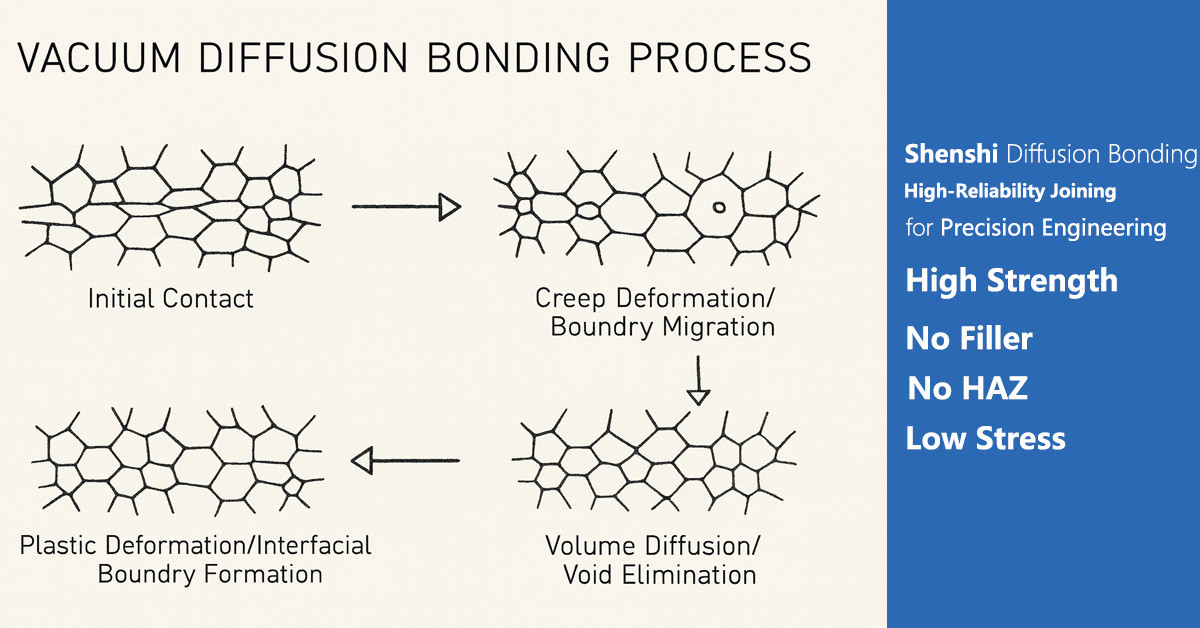
Comparison (Traditional Tower vs Rotating Bed vs Microchannel):
| Aspect | Traditional Tower | Rotating Bed | Shen's Microchannel |
|---|---|---|---|
| Volume | Large | 1/3 of tower | 1/10 of tower |
| Efficiency | 80% | >95% (ship ~70%) | >98% (practical 80%) |
| Sway Resistance | Poor | Medium | Excellent |
| Maintenance | Mature | Short moving parts life | No moving parts, scalable |
| Cost | Medium | High maintenance | Low at scale |
(Comparison (Traditional Tower vs Rotating Bed vs Shen's Microchannel))
Commercial case (25,500 m³/h flue gas): Microchannel costs $5 million, 1/10 volume, fast start-stop, sway-resistant.
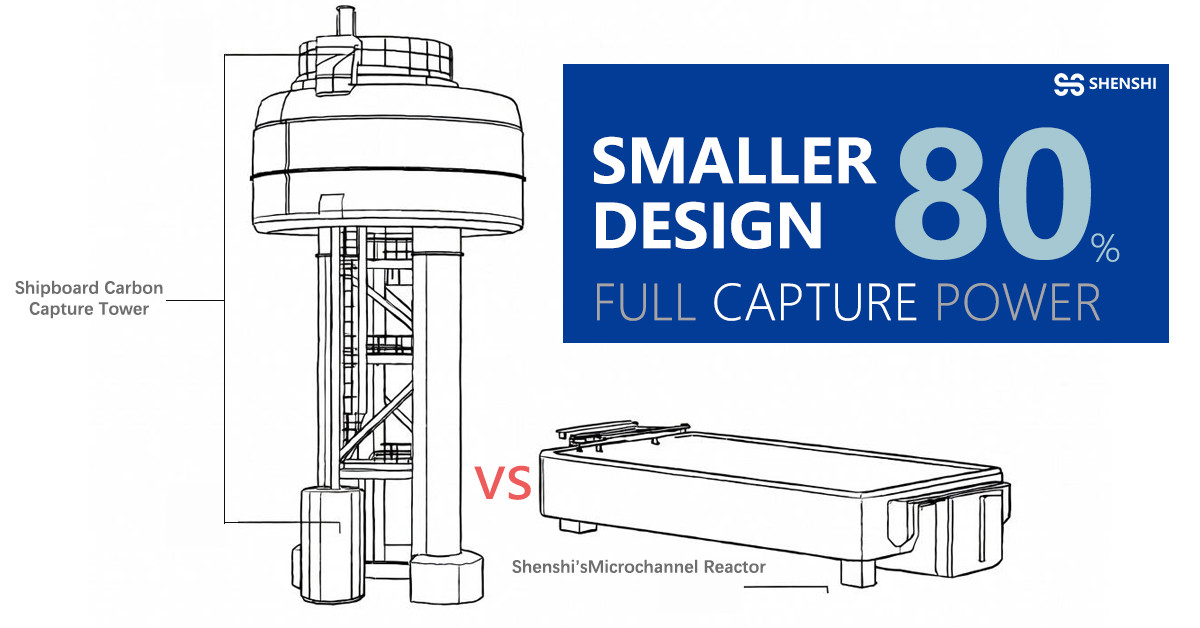
Key Metrics:
- Capture rate ≥90%, meets IMO 2040 65% goal.
- Pressure drop ≤50 kPa, low energy.
- 2999 TEU ship saves 1.5-3 million euros yearly, 2-3 year payback.
Outlook: Three-Step Strategy for Ecosystem Building
Shenshi's open collaboration plan:
- 2026: First offshore demo, AIP certification.
- 2027-2028: 5-10 multi-type vessel demos.
- Post-2028: Global modular sales + joint operations.
Open cooperation in reactors, absorbents, integration, monitoring. Share risks, seize green shipping opportunities.
Onboard microchannel carbon capture is more than innovation. It offers efficient, economic paths amid IMO GHG reduction and shipping carbon tax. Together, zero-carbon shipping is within reach.
Join the Zero-Carbon Shipping Revolution
Partner with Shenshi to accelerate onboard microchannel carbon capture deployment
Contact our experts now