
Fusion Heat Management – Turning 150 Million °C Plasma into Usable Electricity
Introduction
Whenever we gaze at the starry sky, the light and heat we see are essentially the result of continuous nuclear fusion reactions inside stars. Simulating this process to provide humanity with clean, limitless energy has been a pursuit of the scientific community for decades. On Earth, "recreating the Sun" involves engineering challenges far beyond igniting the fusion flame—safely, continuously, and efficiently managing the enormous heat generated by the reaction is one of the greatest hurdles.
Nuclear Fusion Reaction Overview
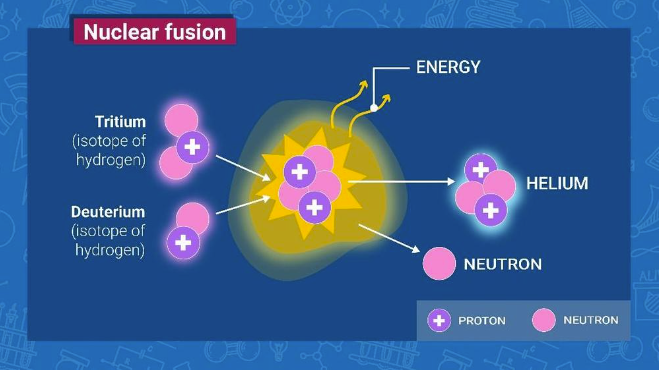
Nuclear fusion is the process where two light atomic nuclei combine to form a heavier nucleus, releasing tremendous energy. The energy of the Sun and all stars comes from this process. In the Sun's core, gravity confinement enables sustained fusion at about 15 million degrees Celsius under extreme pressure.
On Earth, we cannot rely on solar-scale gravity. To achieve controlled fusion, other methods are used to create and maintain reaction conditions. The leading technical paths are magnetic confinement (such as tokamak devices) and inertial confinement (such as laser fusion).
Regardless of the approach, achieving effective net energy gain requires the fusion plasma to satisfy the Lawson criterion—the product of temperature, density, and energy confinement time must reach a critical value. When the energy released by fusion, especially that carried by charged particles, sufficiently heats the plasma itself, the reaction can be self-sustaining.
The Essence and Distribution of Heat Generation
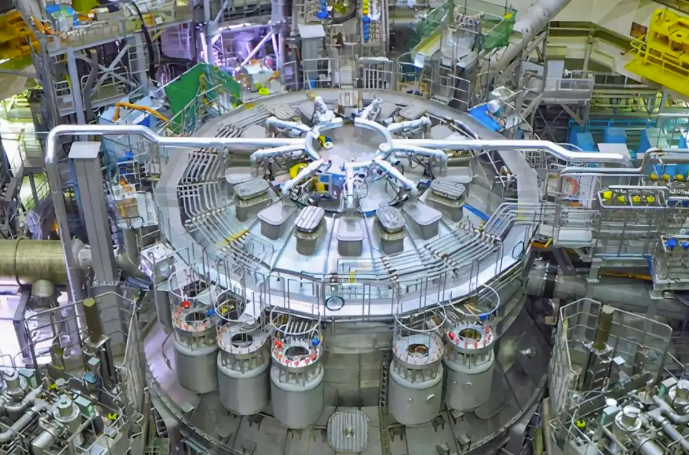
In the deuterium-tritium (D-T) fusion reaction, the most promising for near-term commercialization, each reaction releases about 17.6 MeV of energy. This energy is not released uniformly but is carried primarily by two products: neutrons (about 14.1 MeV) and alpha particles (about 3.5 MeV).
Neutrons, being uncharged, barely interact with magnetic fields and fly straight out of the plasma, penetrating the surrounding blanket structure. There, neutrons slow down through nuclear reactions with blanket materials (lithium, lead, beryllium, etc.) and deposit their kinetic energy, converting most into thermal energy. This portion accounts for about 80% of the total fusion energy released and forms the main output of usable fusion energy.
Charged alpha particles are confined by the magnetic field, depositing most of their energy inside the plasma for self-heating, reducing the need for external heating power. Additionally, the plasma loses some energy through radiation, which directly impacts the innermost first wall.
Thus, efficient utilization of fusion energy hinges on reliably and efficiently transferring neutron-deposited heat in the blanket and radiation/particle heat on the first wall to electricity via a robust heat transfer and conversion system.
Key Links in Heat Transfer
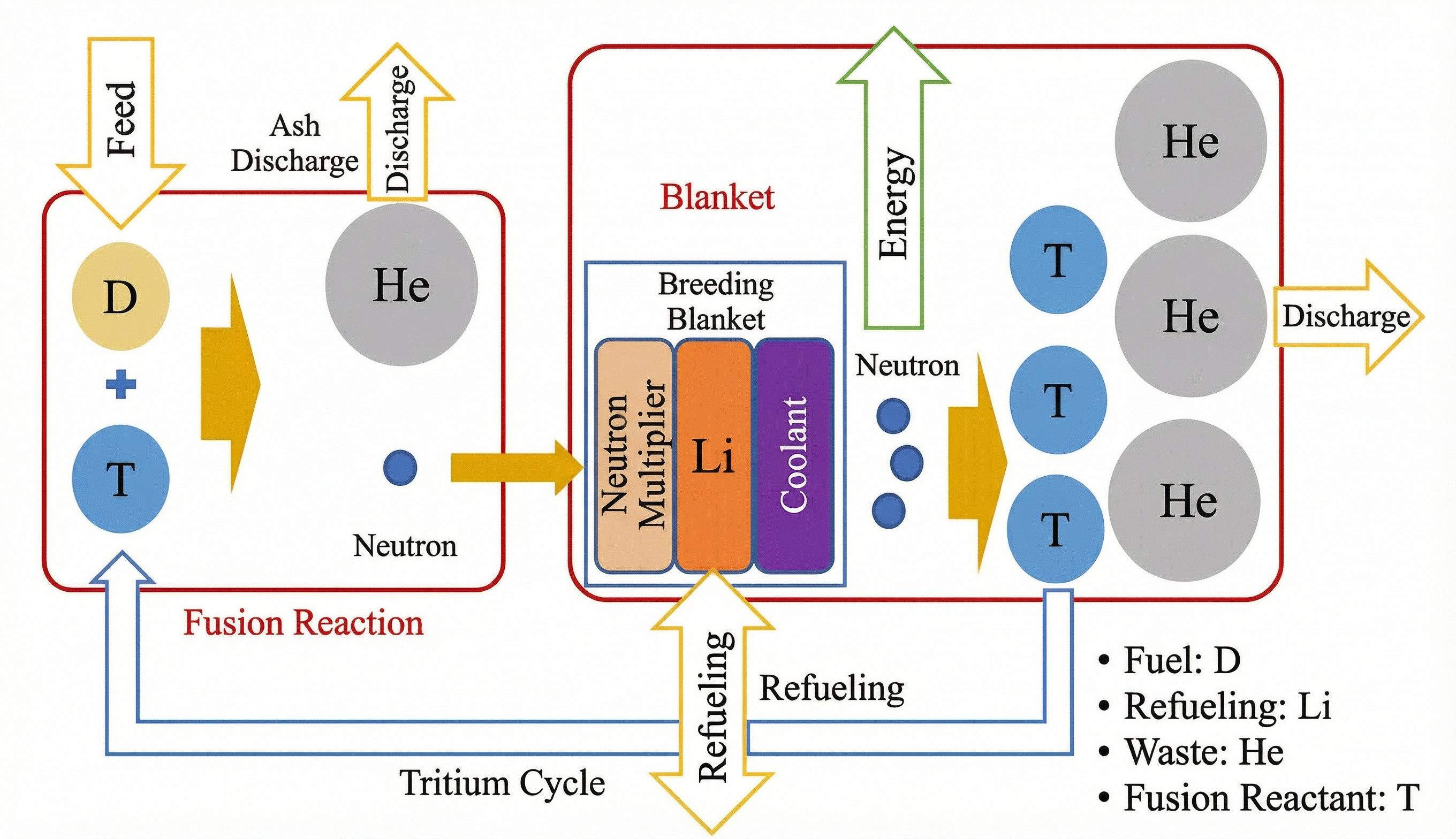
High-temperature coolant carries heat that must be transferred to the subsequent energy conversion system, requiring heat exchangers to bridge this gap.
Heat Exchanger Role
In fusion energy conversion systems, heat exchangers transfer heat from high-temperature coolant to a working fluid (typically water or another suitable fluid). The working fluid absorbs heat and undergoes phase change, turning from liquid to high-temperature, high-pressure steam.
Similar to pressurized water reactors in fission power plants, the primary loop's high-temperature coolant exchanges heat with secondary-loop water, vaporizing it to produce steam for downstream power generation.
Advanced Cycles: Supercritical CO₂ Brayton Cycle
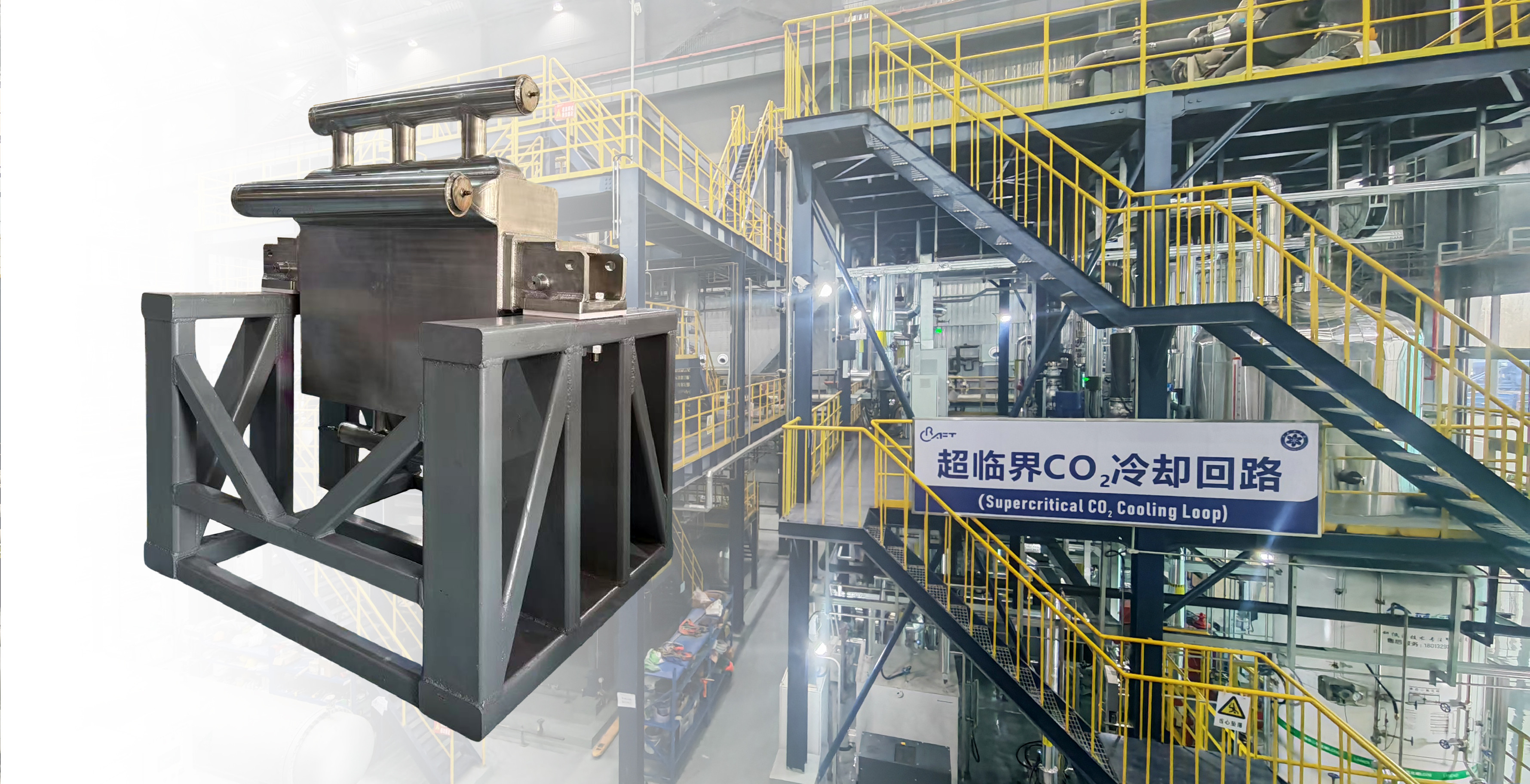
In recent years, the supercritical carbon dioxide (sCO₂) Brayton cycle has emerged as an attractive option. At high temperatures, CO₂ achieves higher thermal cycle efficiency than traditional steam cycles—potentially exceeding 40%—with more compact equipment.
Goals and Challenges of Fusion Heat Management
The goal of fusion heat management is to safely and efficiently convert neutron and radiation-deposited thermal energy into usable electricity and heat resources. Achieving this relies on breakthroughs in high-temperature, radiation-resistant materials, efficient and reliable cooling solutions, integration of advanced thermal cycles, and comprehensive improvements in system safety and maintainability.
Current international efforts, such as the International Thermonuclear Experimental Reactor (ITER) and national fusion engineering test reactors (e.g., China's CFETR), are conducting extensive experiments and validations in these directions.
About Shenshi
Founded in 2005, Hangzhou Shenshi Energy Conservation Technology Co., Ltd. (SHENSHI) is a high-tech enterprise specializing in energy-efficient heat transfer and microreaction technologies. As a pioneer in low-carbon thermal management, Shenshi designs and manufactures high-performance heat exchangers and micro-reactors serving industries such as energy, marine & offshore engineering, hydrogen, pharmaceuticals, and advanced manufacturing.
With solutions deployed across more than 40 countries, Shenshi is committed to delivering reliable, efficient, and sustainable thermal technologies for demanding industrial applications.