
Continuous-Flow Synthesis of Remdesivir Intermediates: Eliminates Cryogenic Operations and High-Risk Feedstock Handling, Boosting Yield by 40%.
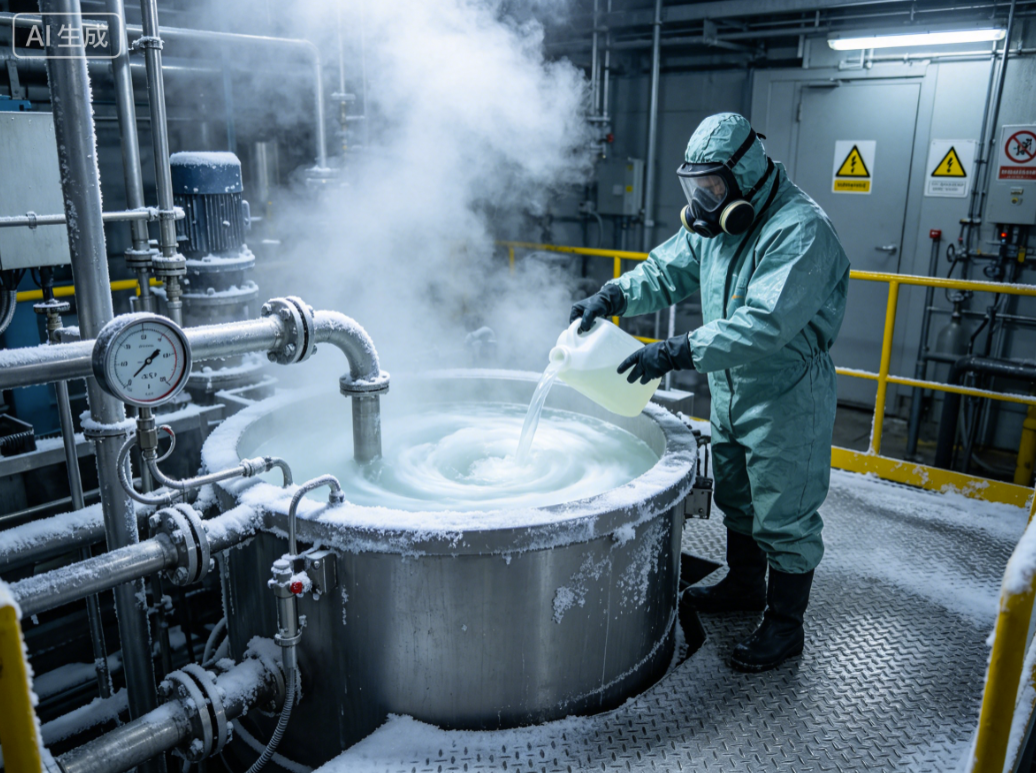
Remdesivir is a nucleotide analog prodrug developed by Gilead Sciences, Inc. that inhibits viral replication by interfering with viral RNA synthesis. During the COVID-19 pandemic, demand grew rapidly, and the limitations of traditional batch processes in terms of safety, production efficiency, and scalability gradually became apparent. The process of remdesivir involves highly toxic cyanides (such as sodium cyanide) and strongly exothermic reactions, posing high operational risks; Key steps must be conducted at extremely low temperatures of -78 ℃, resulting in massive energy consumption and complex equipment; Some phosphide intermediates are sensitive to heat and moisture and are prone to degradation during stepwise operations; After process scale-up, there are significant changes in heat and mass transfer efficiency, making it more difficult to control yield, purity, and batch-to-batch consistency.
I. Cyanation Reaction: Low-temperature batch feeding → Online continuous reaction
Traditional batch process
The alcohol substrate is dissolved and cooled to below -50°C; highly toxic solid sodium cyanide is slowly added in batches under vigorous stirring, followed by the addition of hazardous phosphorus trichloride (POCl₃). The entire process is highly exothermic, posing a risk of highly toxic HCN gas formation. It is prone to issues such as uneven mixing, localized overheating, and difficulty in temperature control, requiring extremely low temperatures to suppress side reactions.
1. Continuous-flow approach
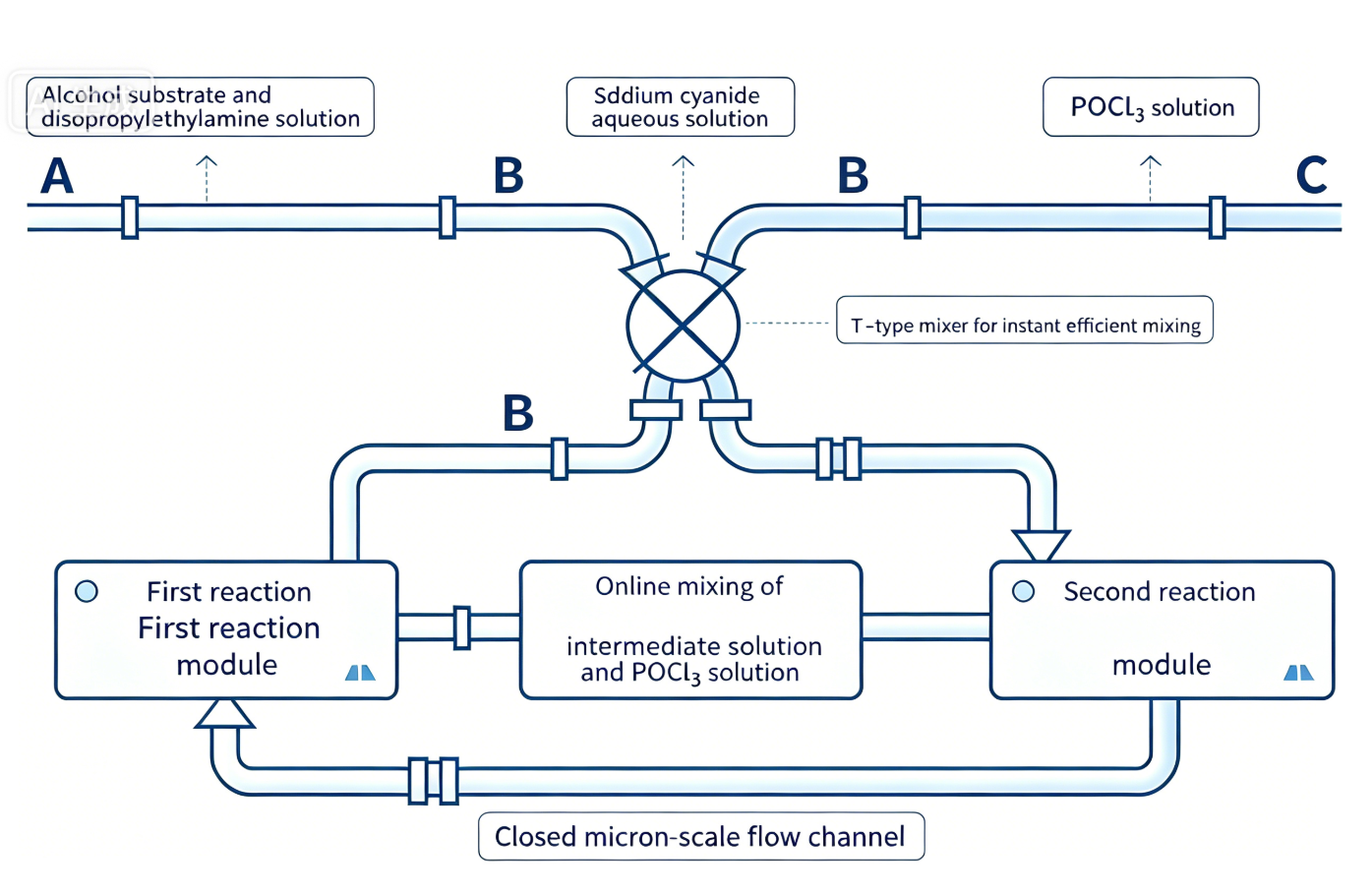
The reaction is transferred to a microchannel or capillary reactor and carried out within sealed micron-scale flow channels:
Flow path A: Alcohol substrate and a solution of a base (e.g., diisopropylethylamine);
Flow path B: Aqueous solution of sodium cyanide (NaCN);
The two streams are instantly and efficiently mixed via a T- or Y-shaped mixer and react in the first temperature-controlled module;
The resulting intermediate solution is immediately mixed in-line with flow path C (POCl₃ solution) and enters the second reaction module.
2. Advantages of Continuous Flow
Intrinsically Safe: The reaction takes place within a sealed pipeline; as soon as HCN is generated, it is carried into the quenching stream, eliminating any risk of exposure.
Precise Temperature Control: The specific surface area of microchannels is 100 to 200 times that of traditional equipment, resulting in extremely high heat transfer efficiency. The process temperature has been raised from below -50 °C in traditional systems to the range of -20 °C to 0 °C, significantly reducing refrigeration energy consumption.
High-Efficiency Mixing: The short diffusion paths in micron-scale channels result in mass transfer efficiency approximately 100 times higher than that of batch reactors; materials are uniformly mixed within milliseconds, significantly reducing side reactions. Precise Residence Time: Materials advance in a “piston flow” pattern, ensuring consistent residence times and uniform product quality.
3. Phosphorylation and Amination: Series of Multi-Step Reactions
In traditional processes, the cyanation product must be separated and purified before proceeding to the phosphorylation step; the separation process is accompanied by degradation losses, which affect the overall yield.
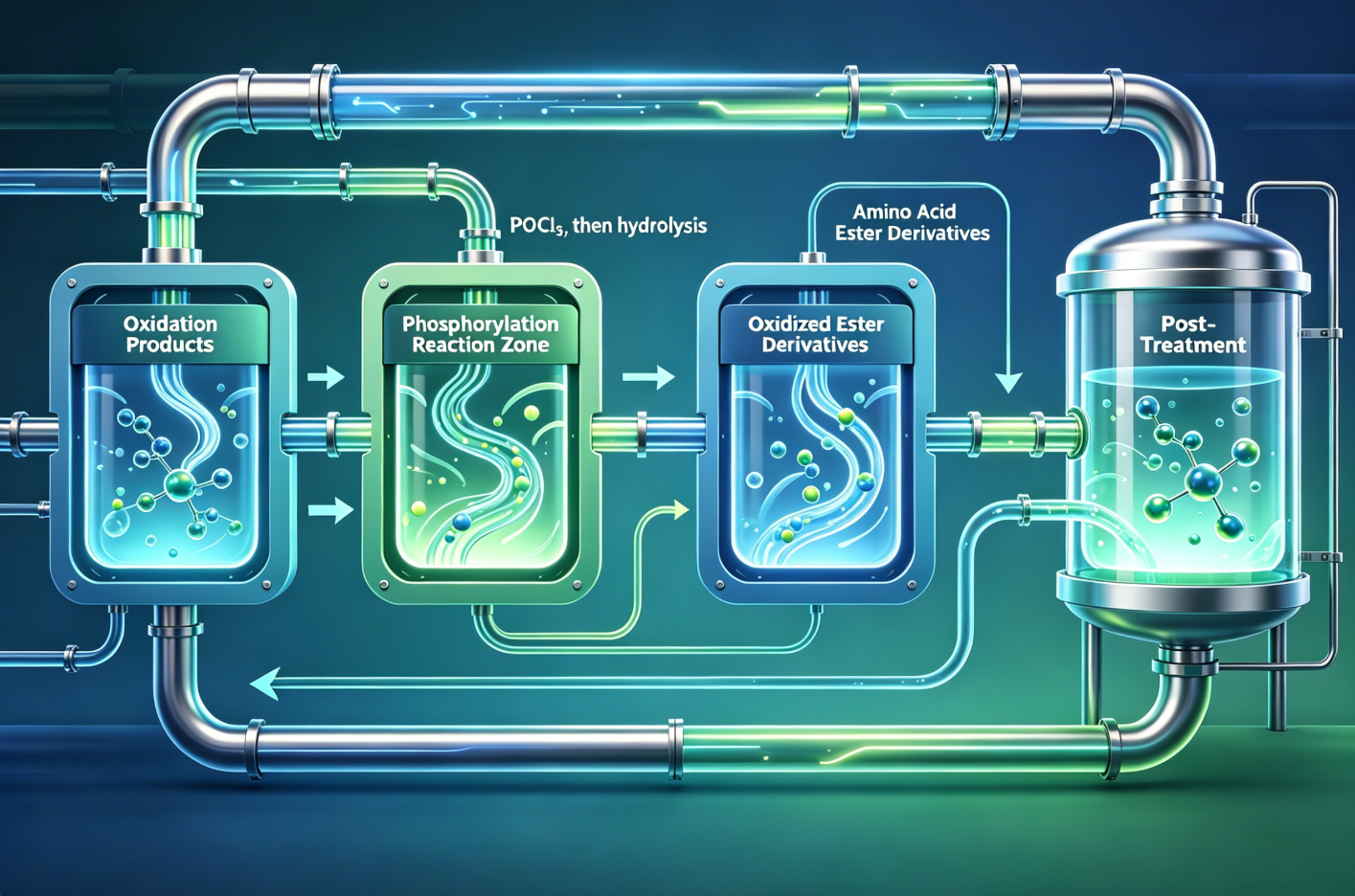
The continuous-flow process uses “Telescoped Flow Synthesis” to cascade multiple reaction steps: (1) The cyanation product proceeds directly to the next reaction module without separation;
(2) It reacts in-line with the phosphorylation reagent (e.g., POCl₃, followed by hydrolysis);
(3) The resulting phosphate intermediate immediately combines with the amination reagent (amino acid ester derivative) in the next module;
(4) The final reaction mixture flows into a quenching tank for post-treatment.
This integrated approach addresses several pain points in the traditional process:
(1) It eliminates the need to purify air- and moisture-sensitive intermediates, converting them directly into the next-step product and improving atomic economy.
(2) Parameters such as temperature, pressure, and flow rate are controlled in real time by PLC/DCS, improving batch-to-batch consistency.
(3) Scale-up employs “numbering-up”—that is, connecting multiple identical microreactor channels in parallel—rather than “size-up.” Process parameters can be highly transferred between gram-scale and metric-ton-scale operations, shortening the development cycle.
II. Comprehensive Benefits of the Continuous-Flow Process
1. Improved Yield and Production Efficiency
Traditional batch processes typically take several days to complete, with an overall yield of approximately 50%; the continuous-flow process reduces production time to a few hours and increases the overall yield to over 90%.
2. Safety Guarantee
Safety Derived from the System’s Design High-risk reagents are always contained within a sealed system with low liquid volume, minimizing inventory levels (the “instantaneous inventory” concept); intense exothermic reactions are immediately removed, eliminating the risk of thermal runaway.
3. Stable Product Quality
Precise control of temperature and reaction time results in a more stable impurity profile, facilitating subsequent purification and quality control, and better meeting pharmaceutical regulatory requirements.
4. Flexible Capacity Expansion
Modular continuous-flow equipment has a short deployment cycle; capacity can be increased simply by adding parallel reaction units, enabling a rapid response to changes in market demand.
5. Green Production
High selectivity reduces byproduct formation while lowering solvent consumption, in line with the principles of green chemistry.
The remdesivir case study demonstrates that the value of continuous-flow chemistry lies in shifting the synthesis logic from “step-by-step batch processing with intermediate separation” to “continuous transformation and online integration.” When handling highly toxic or explosive reagents, strongly exothermic reactions, or unstable intermediates, the advantages of continuous-flow processes and microchannel reactors—including intrinsic safety, precise temperature control, stable scale-up, and automated operation—become even more evident.

MicroSmart (a subsidiary of Shen’s Technology) specializes in the R&D of micro-continuous flow processes and system equipment. Its product portfolio includes microchannel reactors, microchannel heat exchangers, and tubular reactors. Leveraging mature equipment platforms and engineering implementation experience, the company provides comprehensive solutions ranging from process development and pilot-scale validation to industrial-scale upscaling.