
Advanced Tubular Reactor Systems: Optimizing Continuous Flow Chemistry in Manufacturing
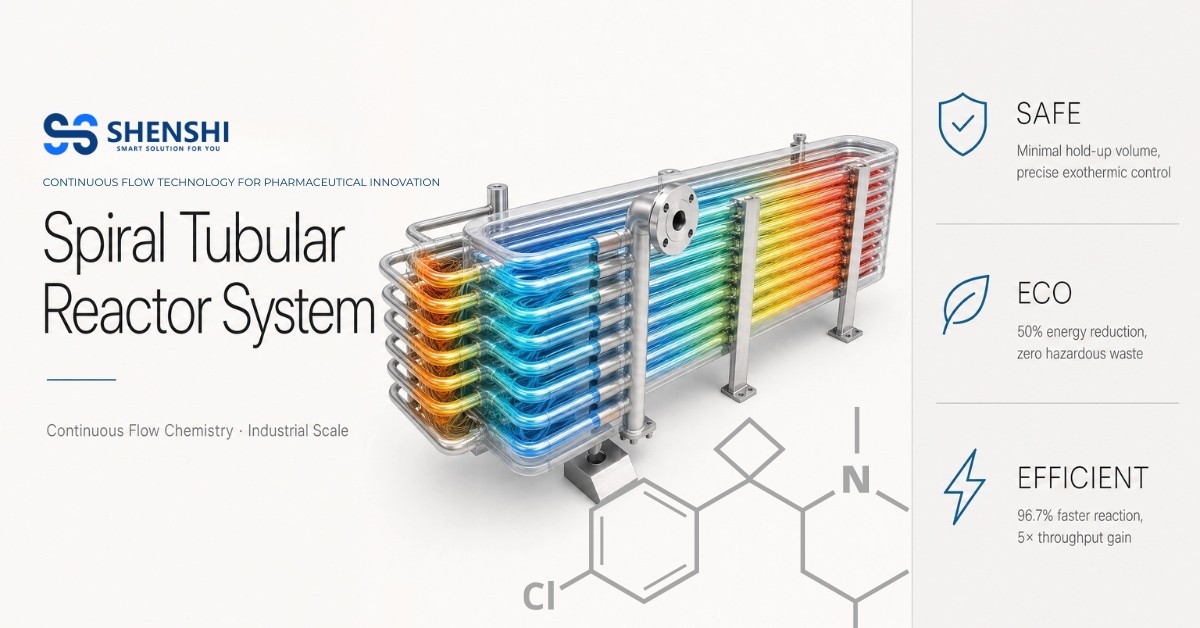
Revolutionizing Chemical Manufacturing with Advanced Tubular Reactor Systems
In the fast-paced world of modern chemical manufacturing, efficiency, safety, and scalability are paramount. Traditional batch processing methods, while historically significant, are increasingly being replaced by continuous flow chemistry technologies. Among these innovations, the tubular reactor (often referred to as a plug flow reactor or continuous flow reactor) stands out as a transformative solution for industries ranging from pharmaceuticals to fine chemicals.
With monthly search volumes indicating strong interest in terms like "chemical reactor" and "continuous flow chemistry," it is clear that manufacturers are actively seeking advanced equipment to optimize their production lines. This article explores the fundamentals, design features, and diverse applications of tubular reactor systems, highlighting how they are shaping the future of industrial chemistry.
Understanding the Tubular Reactor
A tubular reactor is designed for continuous operation, where reactants flow through a tube or pipe, undergoing chemical transformations as they travel. Unlike batch reactors, where materials are mixed in a single vessel and processed over time, a continuous flow reactor allows for a steady stream of input and output. This continuous flow mode ensures consistent product quality, enhances safety by minimizing the volume of hazardous materials present at any given time, and significantly improves overall production efficiency.
The core advantage of a tubular reactor lies in its high surface-area-to-volume ratio. This characteristic facilitates rapid heat transfer and efficient mixing, making it particularly suitable for highly exothermic or fast reactions. By precisely controlling residence time, temperature, and pressure, operators can achieve higher yields and better selectivity compared to conventional methods.
Innovative Design: The Helical Tubular Reactor
One of the most notable advancements in continuous flow technology is the development of the helical tubular reactor. Companies like Shenshi (HZSS) and its subsidiary Micro Intelligent Source (MSET) have pioneered the use of surface-enhanced structures in their reactor designs.
Key Structural Features
The helical tubular reactor features a staggered, sawtooth-like surface structure. This innovative design offers several critical benefits:
• Enhanced Heat Transfer: The structure effectively increases the heat transfer area and thins the condensation liquid film.
• Superior Mixing: As the liquid flows along the microchannels at the base of the fins into the spiral grooves, centrifugal forces push it away from the heat transfer surface. The resulting internal turbulence significantly improves mixing efficiency.
• High Performance: Depending on the operating conditions, the overall heat transfer coefficient can reach an impressive 500 to 3000 W/m²·°C.
Specifications and Scalability
These reactors are highly versatile, with equivalent inner diameters ranging from 3.8mm to 20mm. They are constructed from robust materials such as 316L stainless steel, Hastelloy C276 (HC276), titanium, tantalum, zirconium, and niobium, ensuring compatibility with a wide array of corrosive chemicals. Operating at pressures up to 10MPa and temperatures between -50°C and 250°C, these systems are built to handle demanding industrial environments. Furthermore, the modular design allows for multiple units to be connected in series or parallel, facilitating seamless scale-up from laboratory to industrial production.
From Lab to Factory: Scalable Solutions
The transition from laboratory research to full-scale manufacturing is a critical phase in chemical engineering. Advanced tubular reactor systems offer tailored solutions for every stage of this journey.
Laboratory Apparatus: Miniaturization and Intelligence
For research and development, laboratory-scale continuous flow systems provide a compact and intelligent platform. These setups typically consist of six core modules: feeding, preheating, reaction, product collection, temperature control, and data acquisition. The modular and easily maintainable design allows researchers to flexibly combine microchannel reactors, mixers, heat exchangers, and tubular reactors to optimize reaction conditions. This approach not only accelerates the R&D process but also provides reliable data for subsequent scale-up.
Industrial Production: The King of Cost-Performance
When it comes to industrial-scale manufacturing, skid-mounted integrated systems offer unparalleled value. These turnkey solutions encompass the foundational framework, feeding units, reaction units, control units, and heat exchange systems. By delivering pre-assembled and tested equipment, manufacturers can drastically reduce on-site installation time, including piping, cabling, and loop testing.
Moreover, these systems boast a small footprint and are fully automated. They can be seamlessly integrated into Distributed Control Systems (DCS) for real-time monitoring and remote control, driving the industry towards smarter, "chip-like" factory operations.
Diverse Industrial Applications
The versatility of tubular reactor systems makes them indispensable across various sectors.
• Pharmaceutical Industry: In pharmaceutical manufacturing, continuous flow reactors are used for critical processes such as nitration, oxidation, and fluorination. The precise control over reaction parameters ensures high product purity and adherence to stringent safety regulations.
• Fine Chemicals and Agrochemicals: The ability to handle highly reactive and hazardous substances safely makes these reactors ideal for producing specialty chemicals and pesticides.
• New Energy and Materials: As the demand for advanced materials and renewable energy sources grows, tubular reactors play a vital role in synthesizing complex polymers and battery components.
The EPC Turnkey Delivery Model: From Concept to Production
One of the most significant barriers to adopting new reactor technologies is the complexity of the implementation process. Recognizing this, leading suppliers have developed comprehensive Engineering, Procurement, and Construction (EPC) turnkey delivery models. This end-to-end service model guides clients through every step, from initial feasibility assessment to full industrial commissioning, typically within a 4-to-8-month timeframe.
The process typically unfolds in eight structured stages: requirements intake and feasibility evaluation, bench-scale validation, process optimization, pilot-scale verification, industrial design, skid-mounted equipment fabrication, equipment delivery and on-site commissioning, and finally, pre-production startup. This systematic approach ensures that the transition from batch to continuous flow manufacturing is smooth, risk-mitigated, and commercially viable. Importantly, the initial consultation and feasibility assessment is often offered at no cost, lowering the barrier for companies exploring the technology.
Conclusion
The shift towards continuous flow chemistry is not merely a trend; it is a fundamental upgrade in chemical manufacturing. Tubular reactor systems, particularly those featuring advanced helical designs, offer a compelling combination of safety, efficiency, and scalability. By embracing these technologies, companies can reduce energy consumption, improve product quality, and accelerate their time-to-market. As the industry continues to evolve, the adoption of intelligent, continuous production systems will undoubtedly be a key driver of sustainable growth and innovation.