Balancing Efficiency and Inherent Safety – A Case Study of Continuous Flow Technology in Pigment Red 57 Synthesis
Dyes and organic pigments constitute an important segment of fine chemicals, widely applied in textile printing, inks, coatings, plastics, rubber and other industries. Azo dyes account for over 70% of the total output and product portfolio of dyes, representing the most critical dye category. Their core reactions, diazotization and coupling, are highly exothermic, imposing stringent requirements on mixing efficiency, temperature control and management of hazardous intermediates.
When handling such reactions in conventional batch reactors, drawbacks including large liquid holdup, limited heat and mass transfer capacity, and poor batch-to-batch consistency are commonly encountered. Featuring low liquid holdup, efficient heat and mass transfer as well as precise process control, micro-continuous flow technology demonstrates prominent advantages in diazotization, coupling and similar reactions.
I. Limitations of Conventional Batch Reactor Processes
Many dye manufacturers still adopt traditional batch reactor technology. For high-risk reactions such as diazotization, the main challenges are summarized as follows:
- Restricted heat and mass transfer efficiency
Diazotization requires reaction temperature
maintained at 0–5°C. Conventional reactors have large volume with limited
mixing and heat transfer capacity. Local hotspots easily occur, triggering
diazonium salt decomposition and increased side reactions, which impair product
purity and yield.
- Large on-site inventory of high-risk intermediates
Diazonium salts are thermally sensitive
intermediates prone to decomposition upon heating. Batch reactors typically
hold several tons to dozens of tons of reaction liquid. In case of process
deviation, the massive inventory of hazardous materials leads to substantial
safety risks.
- Difficult control of product consistency
Combined effects of manual feeding,
temperature fluctuation and uneven mixing easily cause quality variations
between batches.
II. Case Study: Continuous Flow Synthesis of Pigment Red 57
1. Introduction to Pigment Red 57
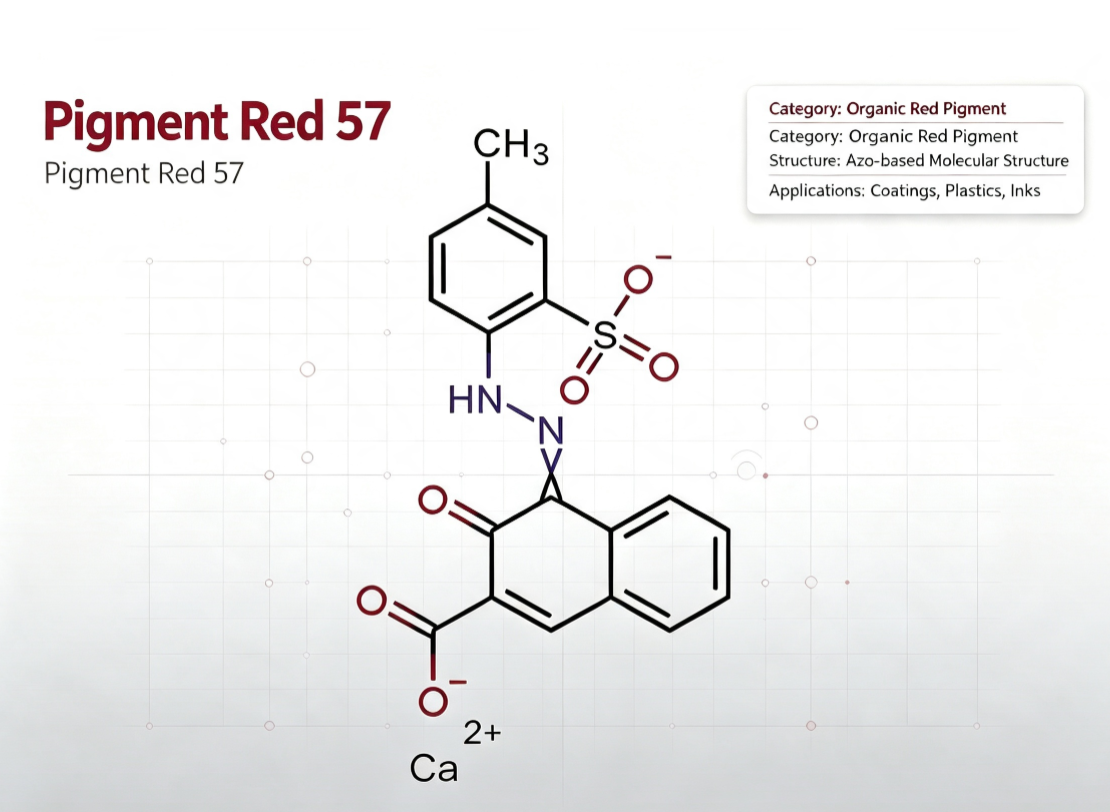
Pigment Red 57 is one of the high-volume naphthol lake pigments. Together with Pigment Yellow 12 and Pigment Blue 15, it is known as the “three pillars” of organic pigments.
Its synthesis consists of three main
stages:
① Diazotization: 4-Aminotoluene-3-sulfonic
acid reacts with sodium nitrite under acidic conditions to form diazonium salt.
C₇H₈NO₃S +
NaNO₂ + HCl → [C₇H₆N₂O₃S]⁺Cl⁻ + NaCl + 2H₂O;
② Coupling: Diazonium salt undergoes
coupling reaction with 2-hydroxy-3-naphthoic acid.
[C₇H₆N₂O₃S]⁺Cl⁻
+ C₁₁H₈O₃ → C₁₈H₁₃N₂O₆S + HCl;
③ Laking: Metal salts such as calcium chloride are added to convert
the intermediate into insoluble lake pigment.
In traditional batch processes, sodium
nitrite solution needs to be slowly added under strict temperature control at
0–5°C for diazotization, with reaction duration exceeding 3 hours; the coupling
step also takes several hours.
2. Continuous Flow Process
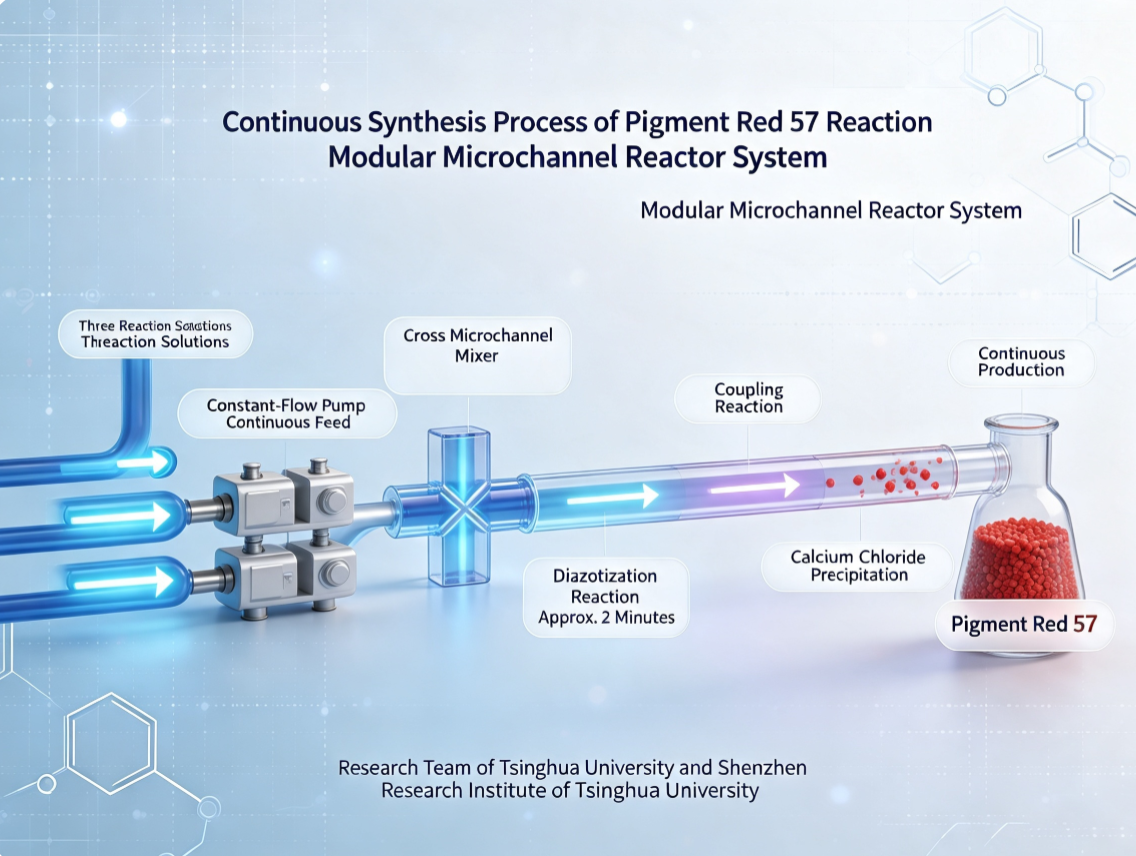
Research teams from Tsinghua University and Shenzhen Tsinghua Research Institute developed a microreactor-based continuous synthesis route for Pigment Red 57. A modular microchannel reactor system integrates diazotization, coupling and laking into a continuous workflow.
Process flow:
(1) Three reaction solutions are
continuously delivered via metering pumps into a cross-type microchannel mixer;
(2) Rapid and homogeneous mixing takes
place inside microchannels, and diazotization completes within approximately 2
minutes;
(3) The formed diazonium salt continuously
flows into the next reaction unit to couple with alkaline 2-hydroxy-3-naphthoic
acid solution;
(4) Calcium chloride is introduced for
laking to realize continuous production.
Performance improvements stem from intrinsic characteristics of microchannel reactors:
(1) On-site liquid holdup ranges from several millilitres to several litres, compared with 5,000–20,000 L in conventional reactors, drastically reducing inventory of hazardous intermediates;
(2) Microscale channels shorten diffusion distance, boosting mass transfer efficiency by 100–1000 times and enabling instant homogeneous mixing;
(3) Extremely high specific surface area delivers superior heat transfer. Temperature can be controlled within ±1°C, providing stable reaction conditions for highly exothermic reactions.
3. Performance Comparison: Micro Continuous
Flow vs Conventional Batch Reactor
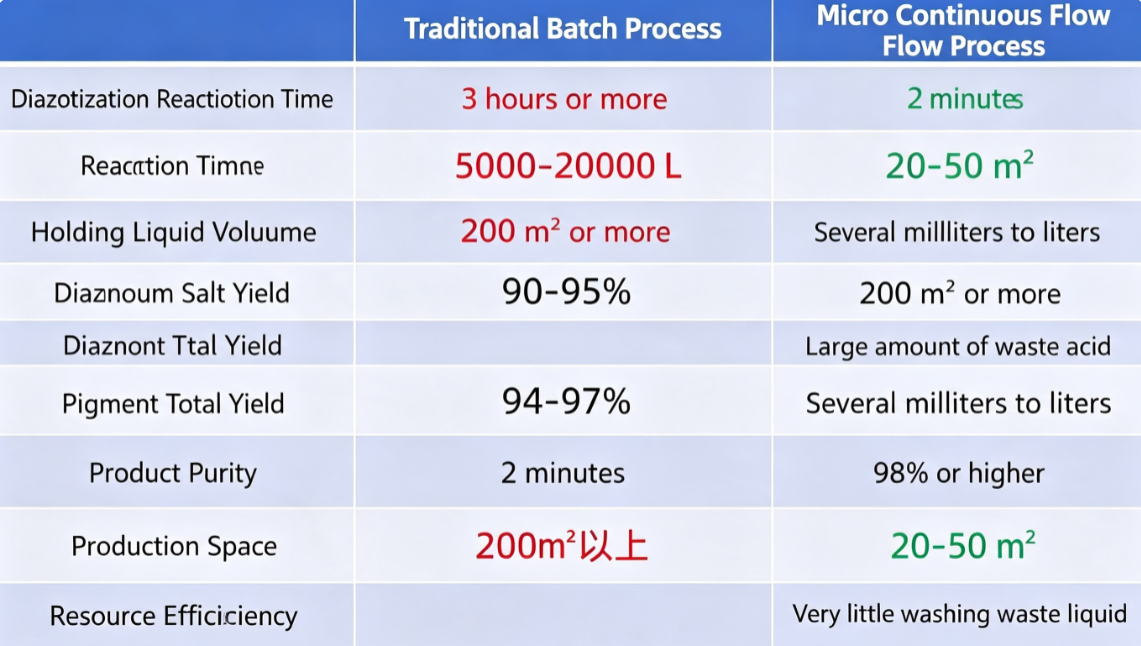
Comparison results show that the diazotization time is shortened from over 3 hours to around 2 minutes. Hazardous liquid holdup drops from tonne scale to millilitre/litre scale. Meanwhile, product yield and purity are improved, plant footprint is reduced by more than 75%, and waste generation is significantly cut.
Successful cases including Pigment Red 57, BODIPY and Rhodamine B prove that continuous flow technology has been validated in various dye and fine chemical reactions, with its engineering application scope constantly expanding.
Advancements in micro-continuous flow technology are driving the fine chemical industry toward higher inherent safety, stable product quality and greater production efficiency. For manufacturers, mature process routes need to be matched with reliable equipment to achieve stable scale-up and long-term steady operation.
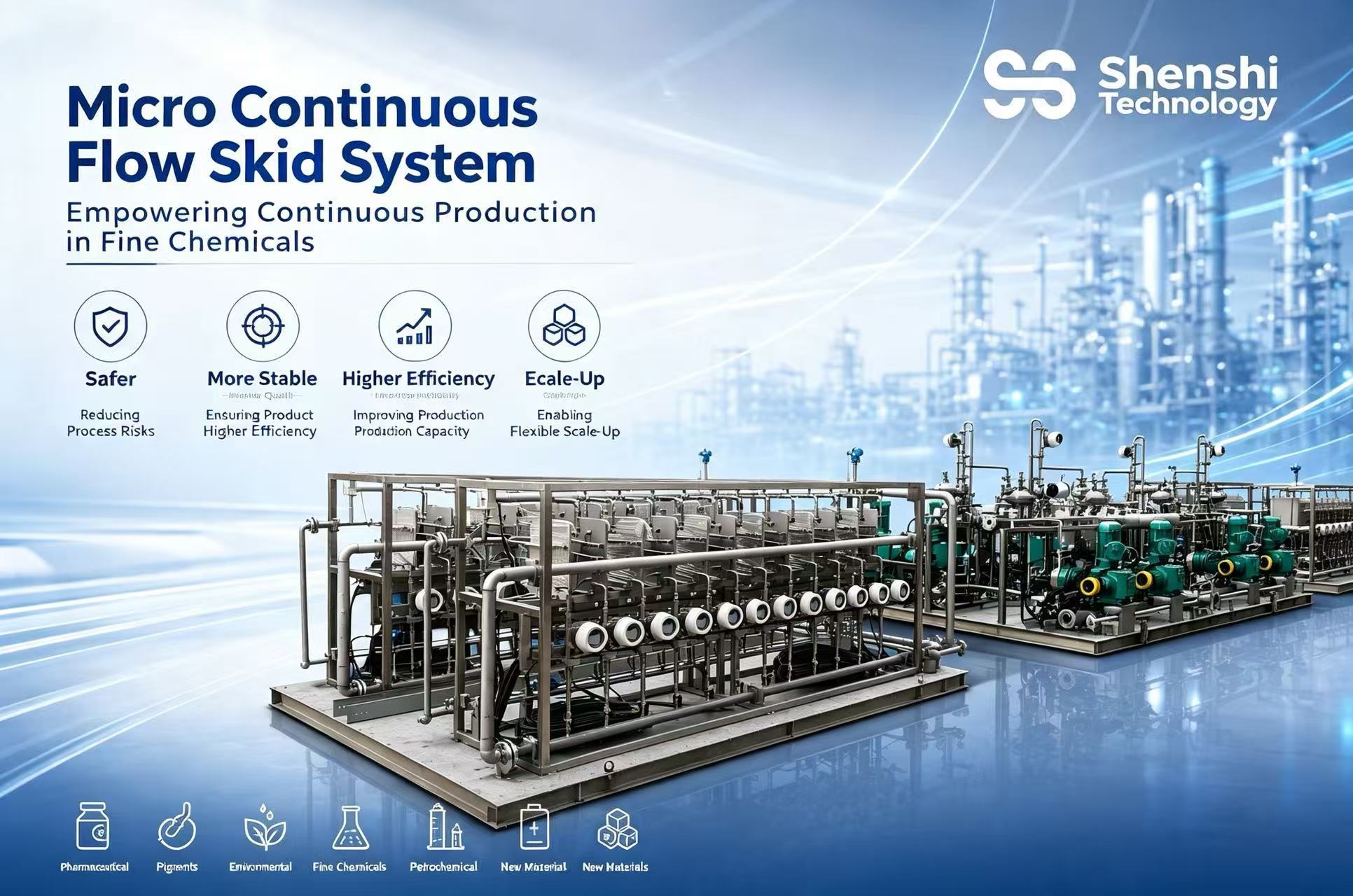
Shenshi Microfluidics focuses on R&D of
micro-continuous flow technology and related equipment. Our product portfolio
covers microchannel reactors, microchannel mixers, modular microreaction units
and skid-mounted continuous flow systems. Based on customized process
requirements, we deliver integrated continuous synthesis solutions for global
clients in pharmaceuticals, dyes, environmental protection, fine chemicals,
petrochemicals, new energy and advanced materials.