Baleine Phase 3 FPSO Hull Construction Kicks Off, Marking the Construction Phase of Côte d’Ivoire’s Deepwater Oil & Gas Development
Baleine Phase 3 FPSO Hull Construction Kicks Off, Marking the Construction Phase of Côte d’Ivoire’s Deepwater Oil & Gas Development
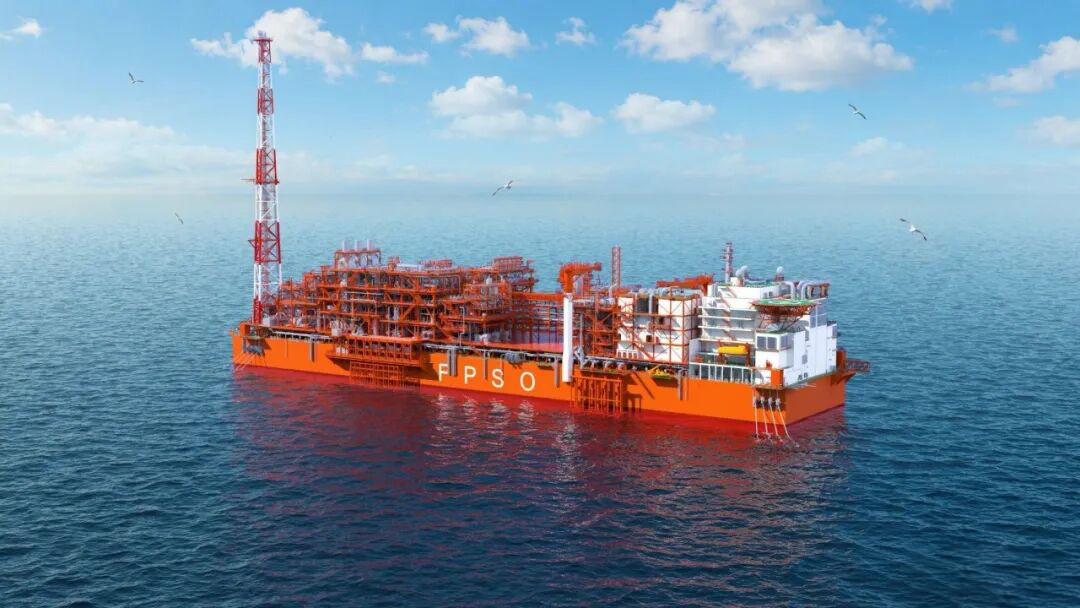
On August 30, Wison Clean Energy held the first steel cutting ceremony for the Baleine Phase 3 FPSO, officially launching hull construction at the shipyard. Previously, Eni and its partners reached the Final Investment Decision (FID) for Phase 3 on May 25, and signed the EPCIC contract for the new-build FPSO on July 3. Approximately three months elapsed between FID approval and the start of hull fabrication.
The new FPSO measures roughly 308 meters in length, 57 meters in beam and 29.8 meters in depth, with a designed operating water depth ranging from 800 to 1,200 meters. It features a crude oil processing capacity of 90,000 barrels per day, produced water handling capacity of 80,000 barrels per day, gas processing capacity of 160 million standard cubic feet per day, and crude oil storage capacity of around 1.4 million barrels, with a minimum design service life of 20 years. Altera Infrastructure acts as the vessel owner and operator under agreements including a 15-year bareboat charter term and associated operation arrangements.
- Phase 1 commenced production in
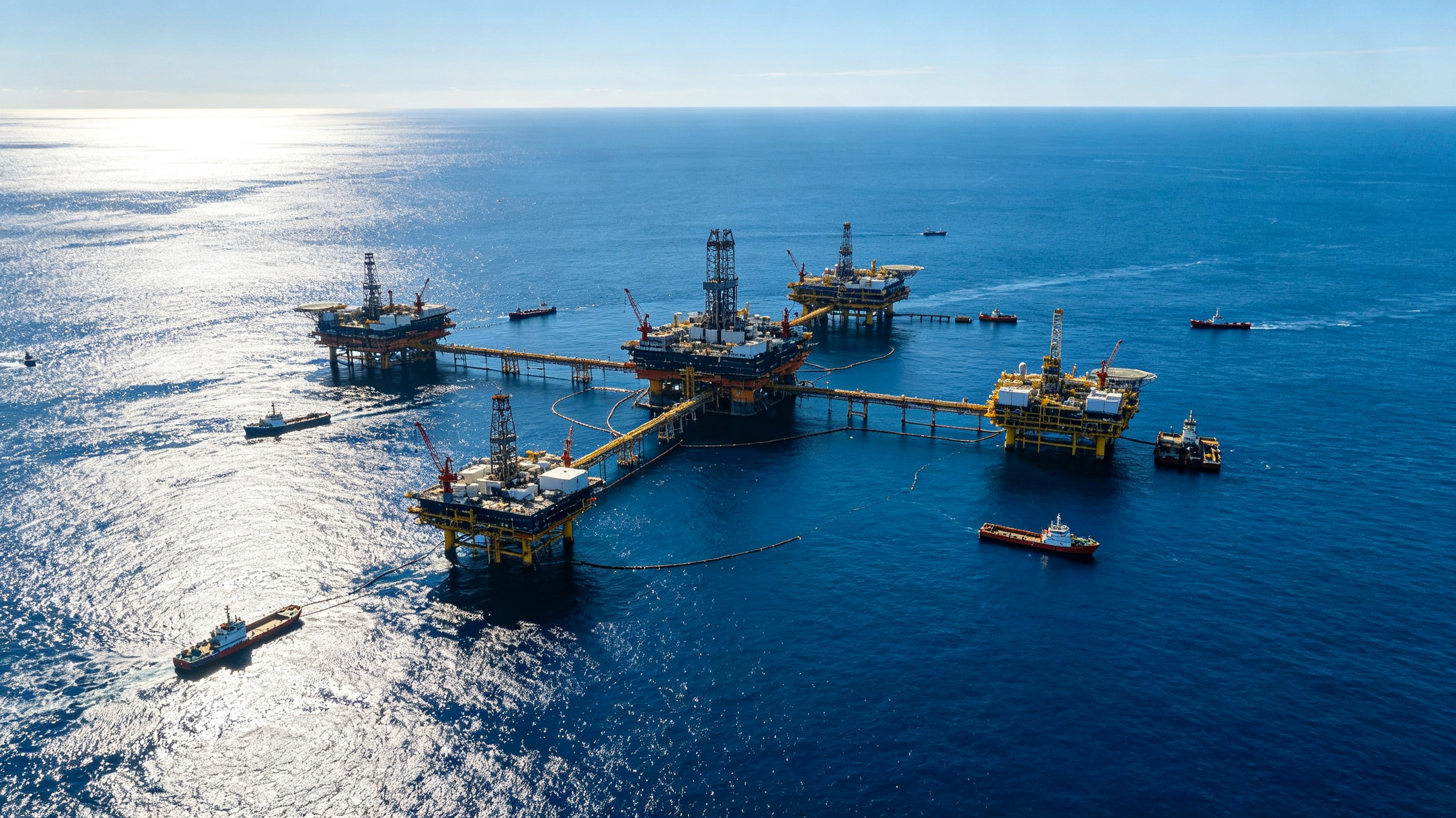
August 2023 and Phase 2 came online in December 2024. Both early phases relied
on converted and redeployed floating assets to achieve rapid startup.
- By contrast, Phase 3 adopts a fully new-build FPSO, transitioning production infrastructure from retrofitted floating units to a large-scale purpose-built floating production facility.
- Upon full ramp-up of Phase 3, the Baleine field’s crude oil output will rise from approximately 60,000 barrels per day to 150,000 barrels per day, while gas production will increase from 80 million standard cubic feet per day to 200 million standard cubic feet per day. All incremental gas output will supply the domestic Côte d’Ivoire market for power generation and industrial energy consumption.
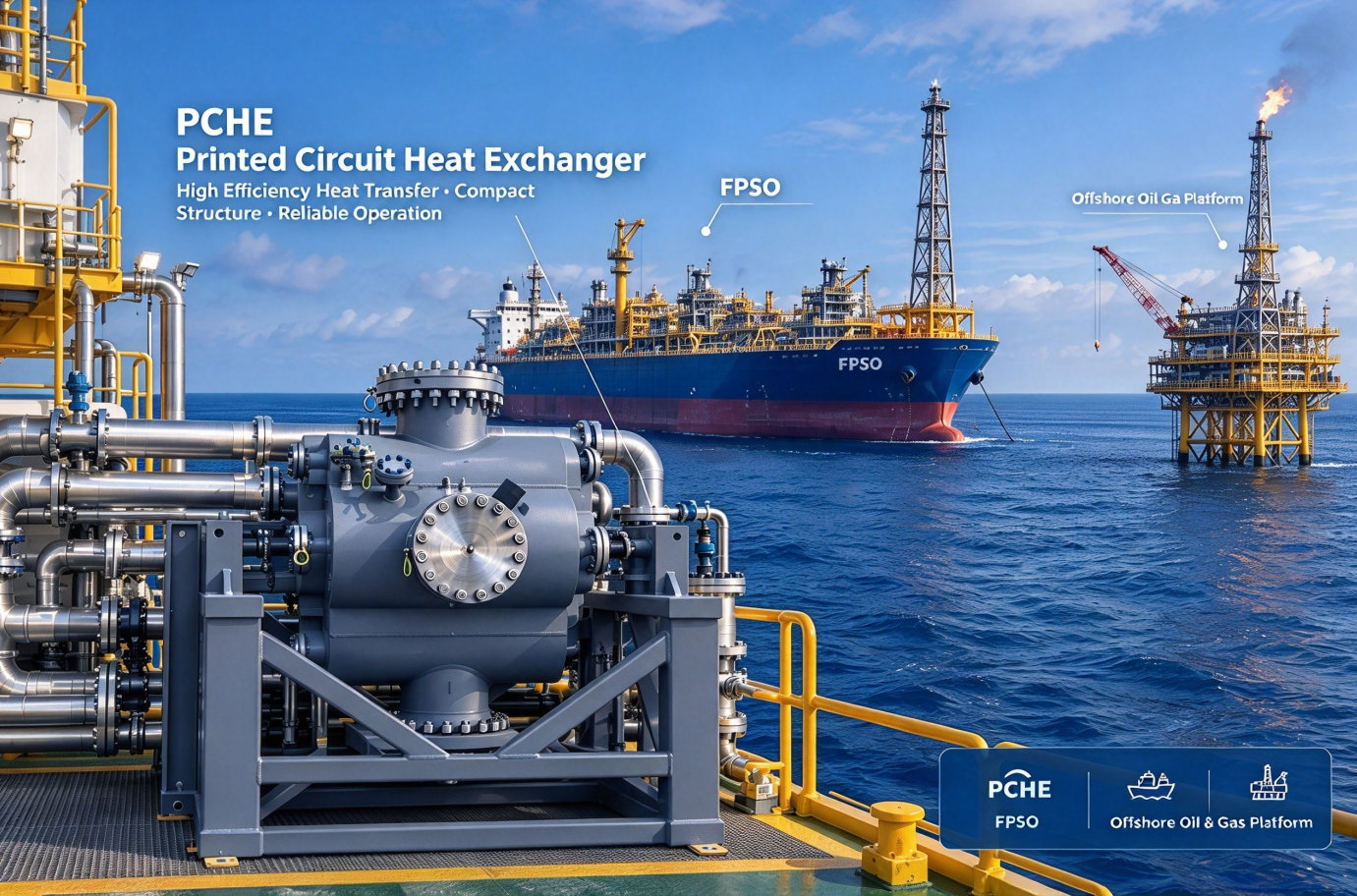
New-Build FPSO: Extensive System Integration Beyond the Hull
An FPSO integrates offshore oil & gas production, processing, storage and offloading functions. Subsea wellstream fluids flow into the FPSO and undergo oil-gas-water separation, crude oil treatment, gas conditioning and produced water treatment. Processed crude is stored in cargo oil tanks before transfer via offloading systems.
The hull serves only as the foundation of the FPSO. Topsides modules, oil & gas processing equipment, power systems, piping, electrical and control systems require comprehensive integration. With a large equipment count and tightly coupled systems, the confined hull space must simultaneously satisfy throughput targets, equipment layout and maintainability requirements.
Thermal management runs across all these systems. Gas processing involves vaporization and condensation heat exchange cycles, while crude handling and power machinery demand heating and cooling. FPSO modules feature high packing density, and heat exchangers must withstand harsh offshore conditions including salt spray, vibration and high pressure. Compact solutions such as Printed Circuit Heat Exchangers (PCHE) have seen rising adoption in deepwater projects in recent years, offering high heat transfer area per unit volume and compact footprint — critical advantages where space and weight onboard are constrained.
All these systems are configured during shipyard construction. Vessel commissioning, hookup of piping as well as electrical and control system testing must be completed prior to integrated vessel trials and offshore deployment. This represents a key distinction between new-build FPSOs and retrofitted floating assets.
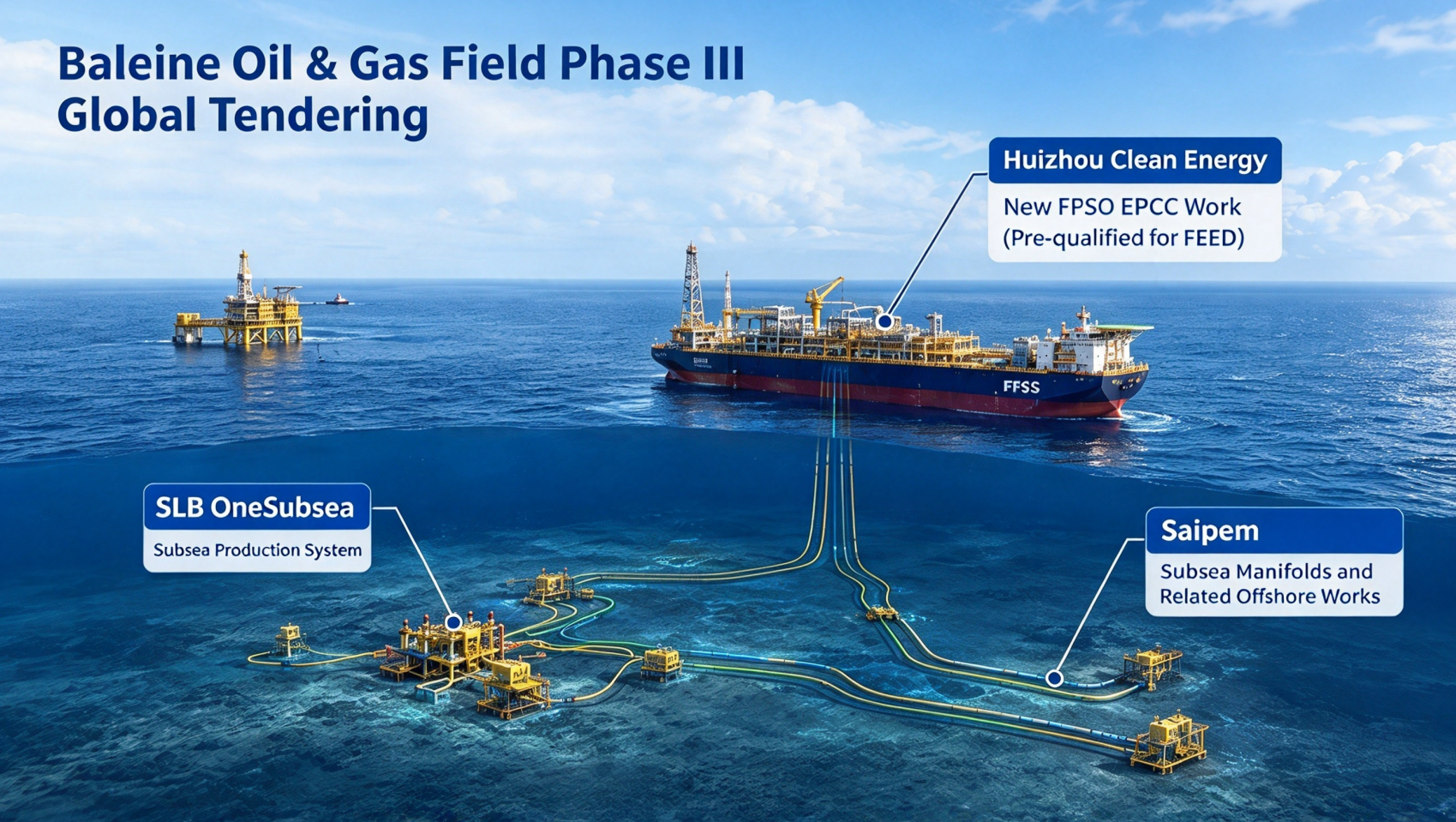
Parallel Execution of FPSO and Subsea Works
According to Saipem, its Phase 3 scope covers approximately 50 km of rigid subsea pipelines plus associated subsea structures, flexible risers, jumpers, subsea well production systems, flexible gas export lines and umbilicals. The FPSO, subsea production system and subsea pipelines progress in parallel, with final interconnection to be completed offshore.
A notable feature of Baleine Phase 3 lies in its adoption of different floating production solutions across successive phases of the same field. Phases 1 and 2 utilized converted, redeployed assets, while Phase 3 employs a purpose-built FPSO. For deepwater oil & gas developments, repurposed floating infrastructure and new-build FPSOs are not rigid, mutually exclusive options. Developers select solutions based on project stage, production targets and availability of existing assets. Baleine Phase 3’s transition from retrofitted units to a new-build FPSO offers a clear illustration of this strategic distinction.
About Shenshi
Founded in 2005, Hangzhou Shenshi Energy Conservation Technology Co., Ltd. (SHENSHI) is a high-tech enterprise specializing in energy-efficient heat transfer and microreaction technologies. As a pioneer in low-carbon thermal management, Shenshi designs and manufactures high-performance heat exchangers serving industries such as energy, marine & offshore engineering, and hydrogen.