
Compact & Ultra-Reliable PCHE Powers Green LNG Dual-Fuel Vessel Decarbonization
Low temperature and high pressure resistance, compact and lightweight design: Shenshi Technology's PCHE Applied to LNG Dual-Fuel Ultra-Large Container Ships
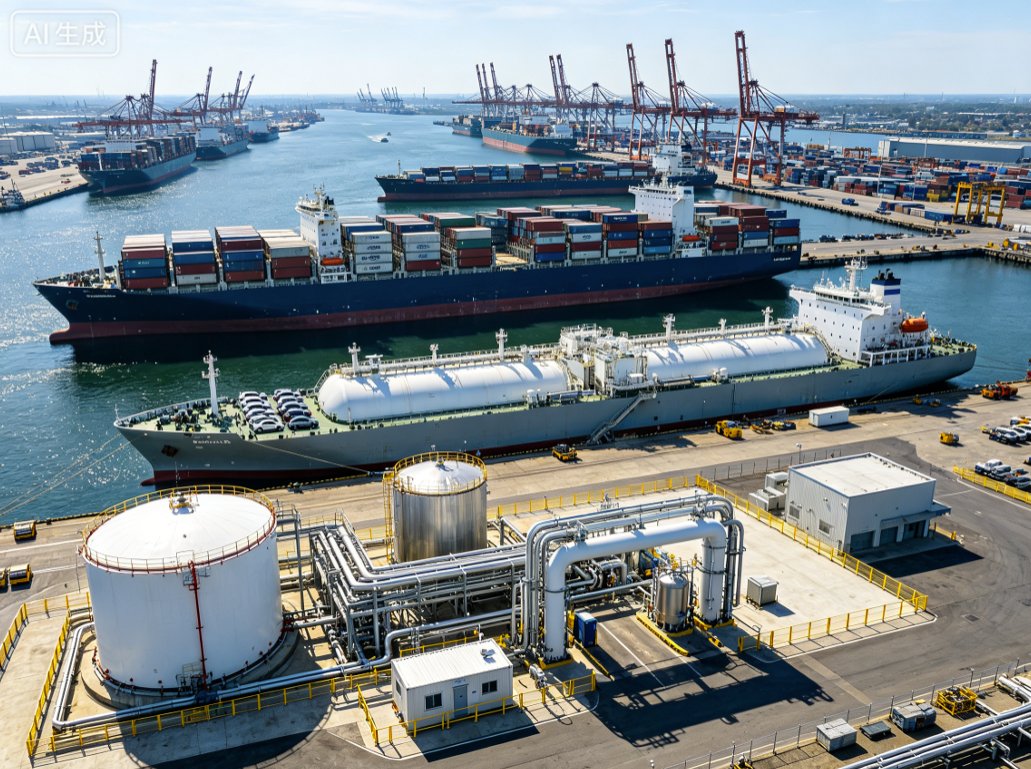
Green shipping is advancing alongside global greenhouse gas emission reduction initiatives. Liquefied Natural Gas (LNG) features mature technologies and relatively complete supporting facilities, making it the most widely adopted low-carbon marine fuel at present. It has been applied in batches to vessel types such as ultra-large container ships, pure car and truck carriers, and LNG carriers, emerging as a mainstream route for the green transformation of ocean-going vessels.

Shipboard Application: Ultra-large LNG Dual-Fuel Container Ship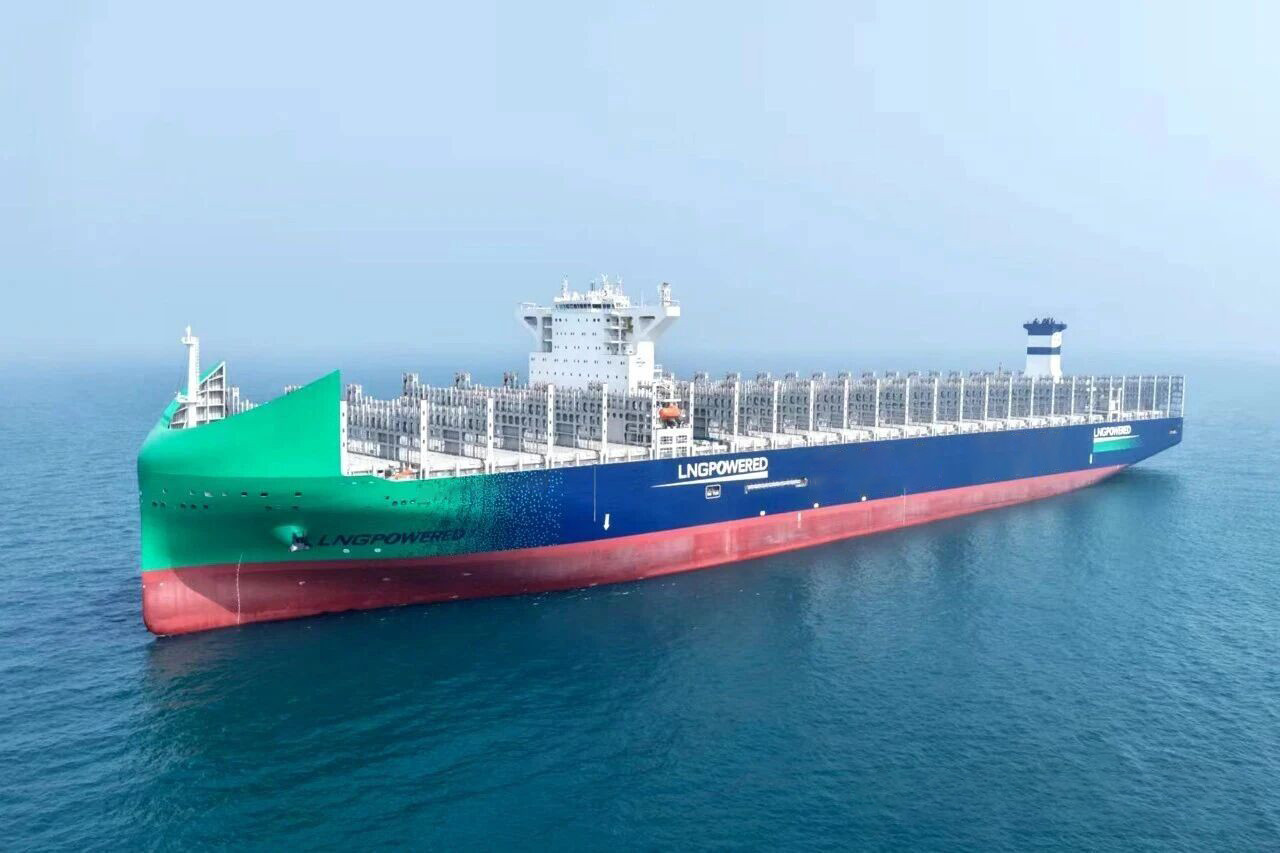
On an extra-large LNG dual-fuel container ship, the PCHE independently developed and manufactured by Shenshi Technology is applied to the vessel’s fuel supply system. Constructed by a leading domestic shipbuilding enterprise for a world-renowned international shipping group, the ship has been classed by an authoritative international classification society and fitted with an oversized membrane-type LNG fuel tank. A single bunkering can meet the endurance requirements of typical ocean-going routes, making it one of the representative types of large-scale LNG dual-fuel container ships currently available.
Adopting a three-stream microchannel structure, the core body of this PCHE is integrally formed via the vacuum diffusion welding process. It eliminates traditional sealing components such as gaskets, fundamentally eliminating the risk of leakage. The combination of enhanced heat transfer performance from microchannels and the integrated diffusion-welded structure enables the PCHE to feature smaller footprint, lighter weight and higher power density under the same heat exchange capacity. For marine applications, reduced equipment weight directly lowers the dynamic load on pipelines and the static structural load on associated supports, allowing greater flexibility in system layout. Its compact size frees up installation space and reserves more ample access for surrounding pipeline arrangement and routine maintenance.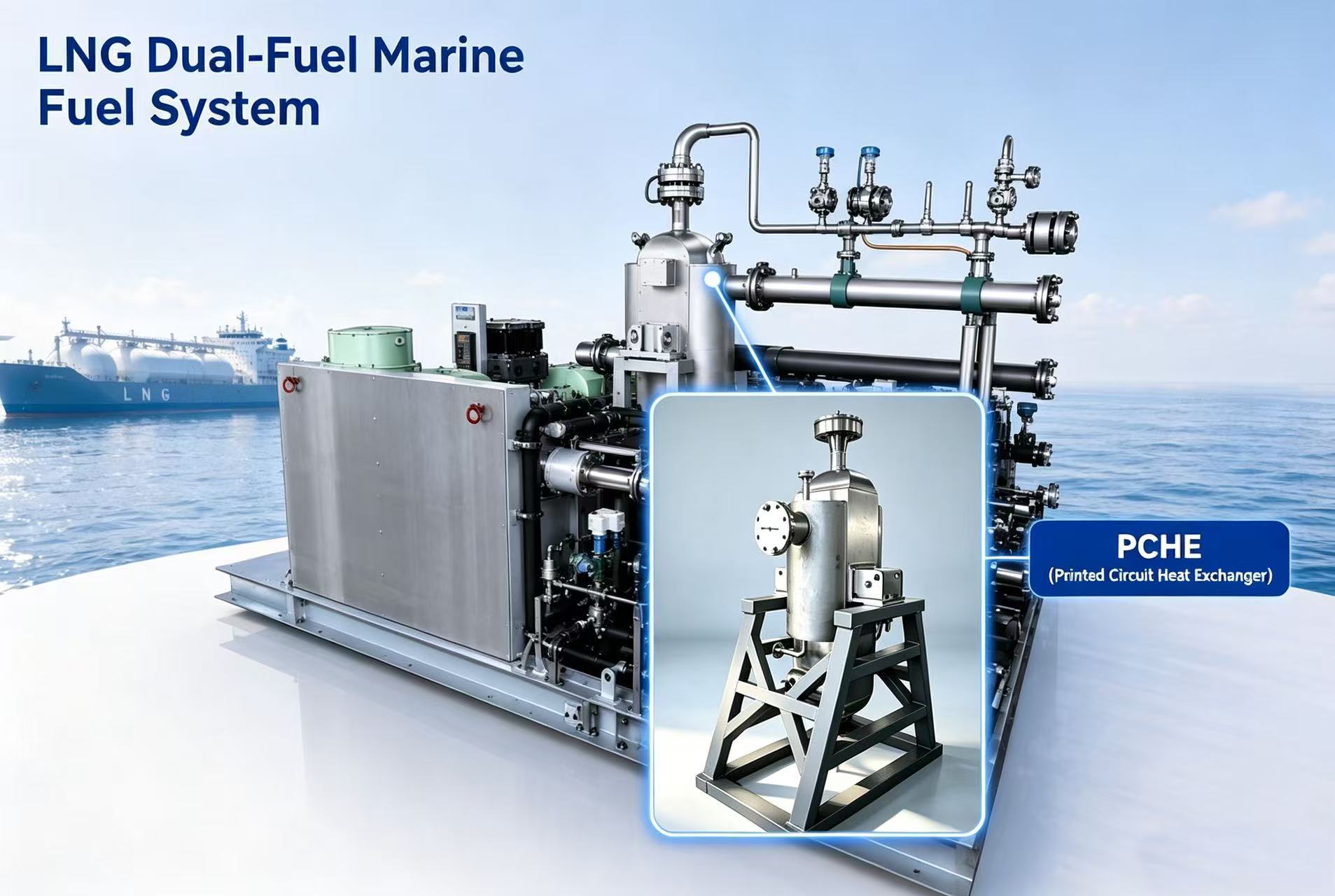
Tackling Cryogenic Freeze Blockage: PCHE Adapts to Diversified Low-Carbon Marine Fuels
To address the risks of vaporizer icing or medium solidification caused by the ultra-low temperature of LNG, Shenshi Technology has adopted patented microchannel "interlayer" technology to optimize temperature field distribution and prevent local supercooling. This effectively avoids freeze blockage while maintaining high-efficiency vaporization performance, ensuring long-term stable operation of the vessel.
The large-scale adoption of low-carbon and zero-carbon fuels is reshaping the technical specifications for marine thermal management. Thanks to its strengths in compactness, lightweight design and reliability, PCHE is increasingly being considered as an option for the fuel supply systems of large LNG-powered ships.
As low-carbon and zero-carbon fuels including methanol and ammonia are put into practical onboard use, varying fuel systems impose increasingly differentiated requirements on heat exchange equipment in terms of compactness, material compatibility and anti-freeze-blockage capability. Advanced heat exchange technologies represented by PCHE are extending the experience accumulated in the LNG shipping sector to marine thermal management scenarios for these emerging fuels.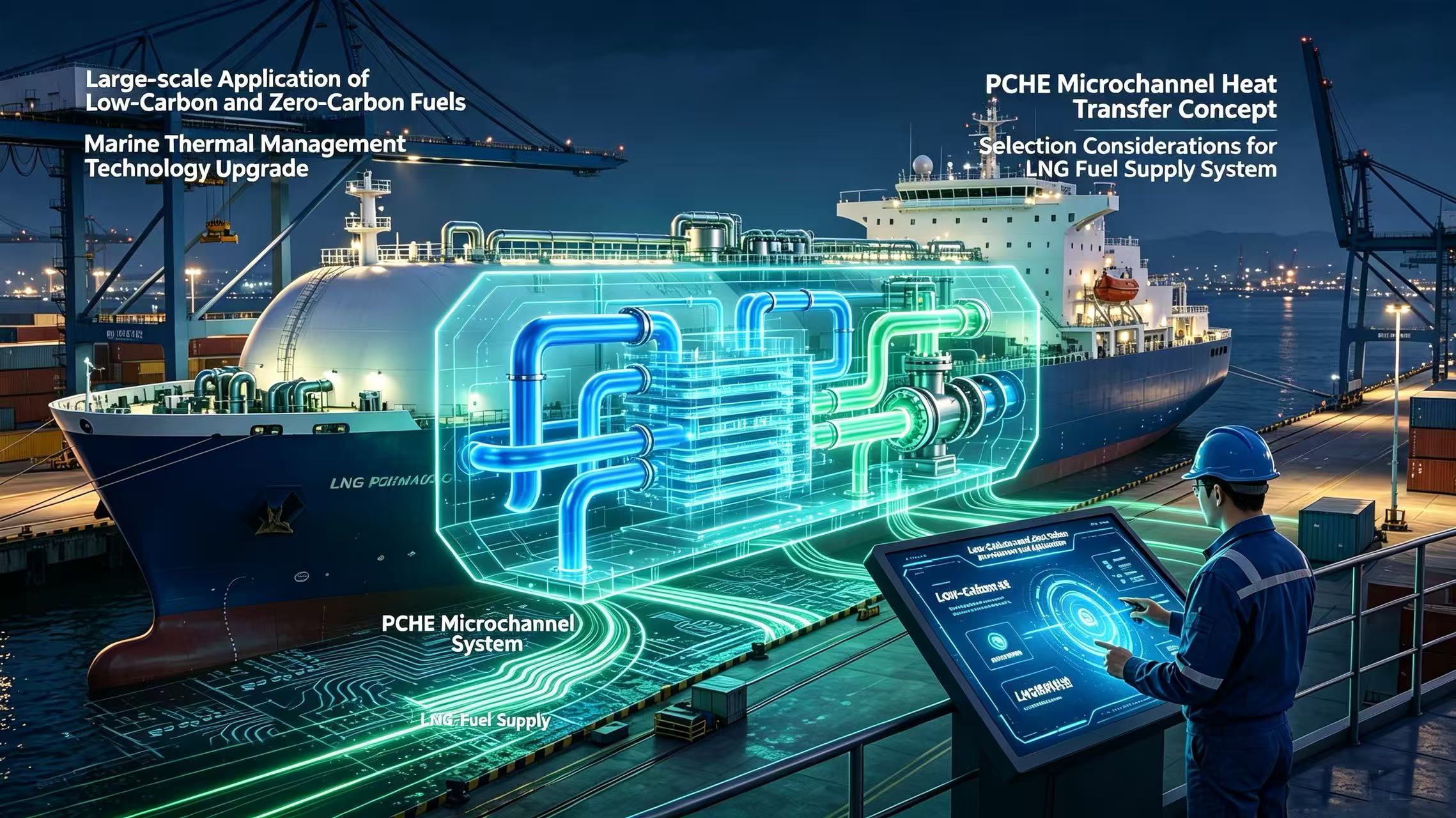
About Shenshi
Founded in 2005, Hangzhou Shenshi Energy Conservation Technology Co., Ltd. (SHENSHI) is a high-tech enterprise specializing in energy-efficient heat transfer and microreaction technologies. As a pioneer in low-carbon thermal management, Shenshi designs and manufactures high-performance heat exchangers serving industries such as energy, marine & offshore engineering, and hydrogen.