
Continuous-Flow Synthesis of Remdesivir Intermediates: Eliminates Cryogenic Operations and High-Risk Feedstock Handling, Boosting Yield by 40%.

Continuous-Flow Synthesis of Remdesivir Intermediates: Eliminates Cryogenic Operations and High-Risk Feedstock Handling, Boosting Yield by 40%.
Remdesivir is a nucleotide analog prodrug developed by Gilead Sciences, Inc. that inhibits viral replication by interfering with viral RNA synthesis. During the COVID-19 pandemic, demand grew rapidly, and the limitations of traditional batch processes in terms of safety, production efficiency, and scalability gradually became apparent. The process of remdesivir involves highly toxic cyanides (such as sodium cyanide) and strongly exothermic reactions, posing high operational risks; Key steps must be conducted at extremely low temperatures of -78 ℃, resulting in massive energy consumption and complex equipment; Some phosphide intermediates are sensitive to heat and moisture and are prone to degradation during stepwise operations; After process scale-up, there are significant changes in heat and mass transfer efficiency, making it more difficult to control yield, purity, and batch-to-batch consistency.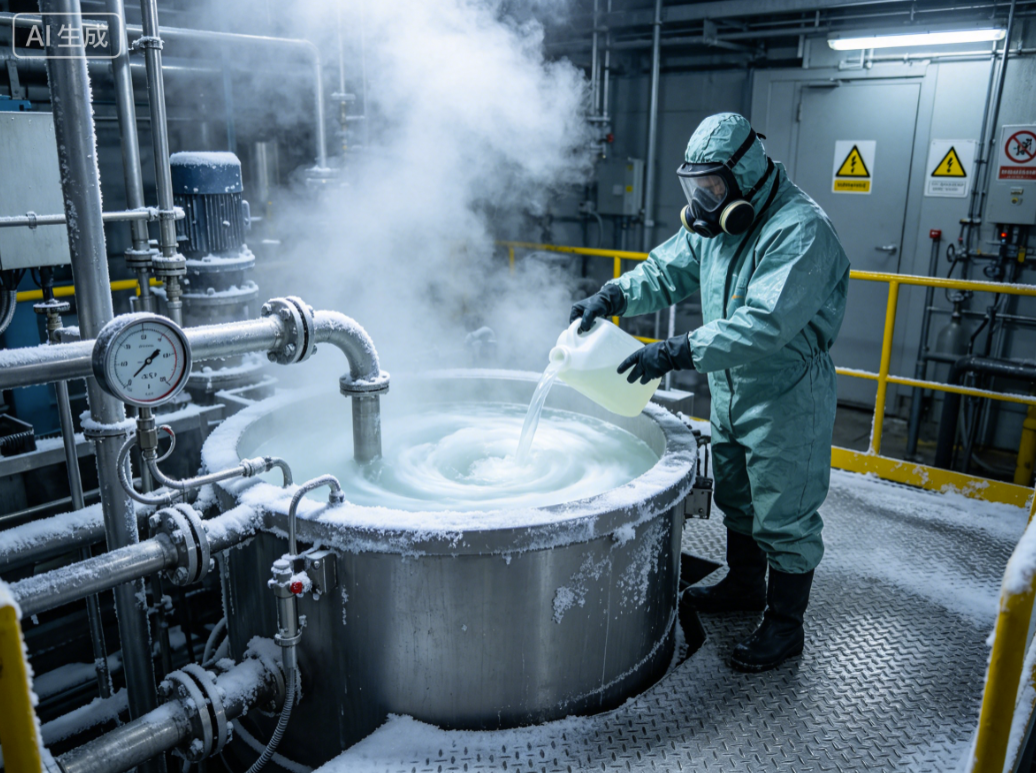
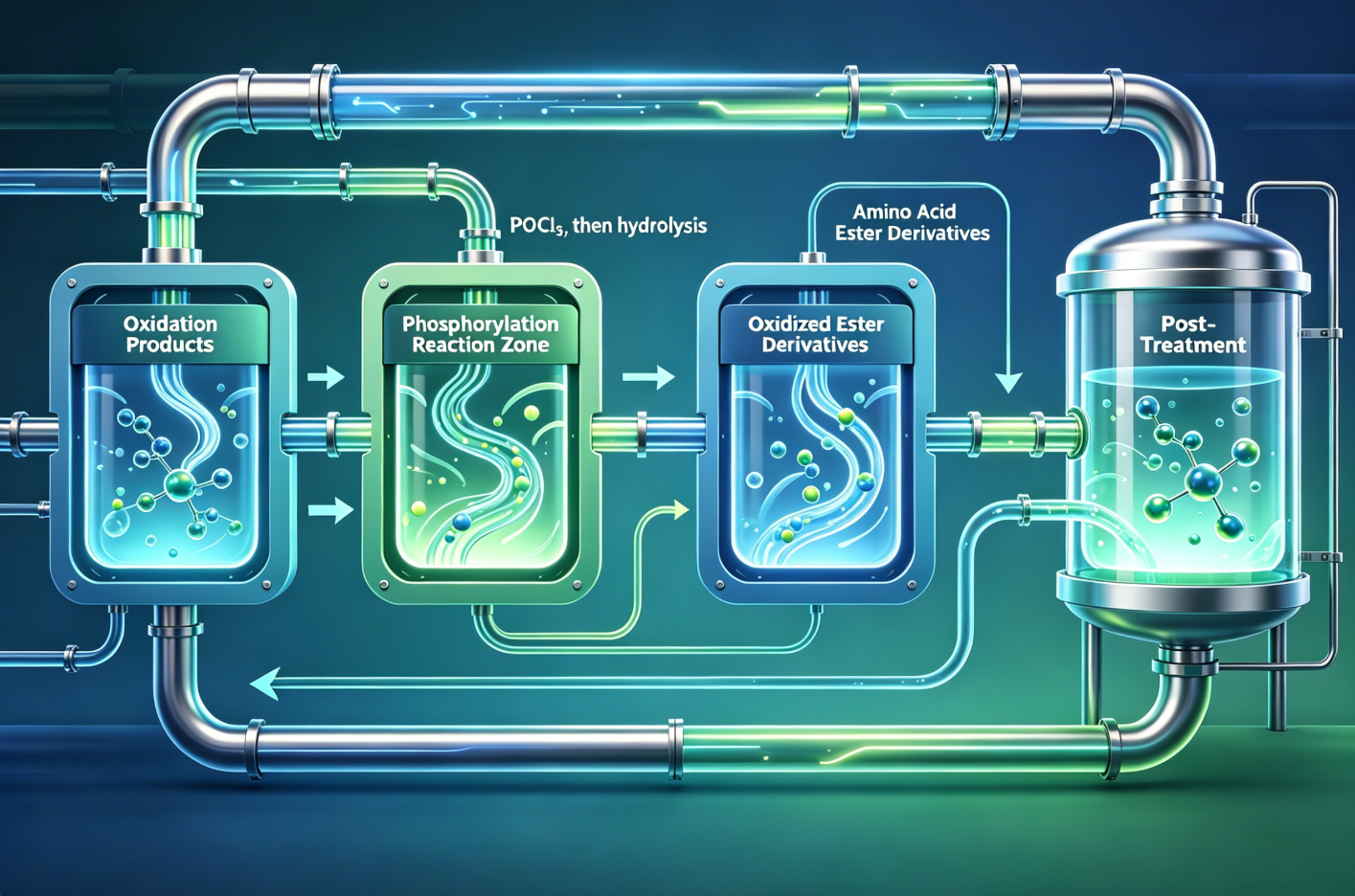
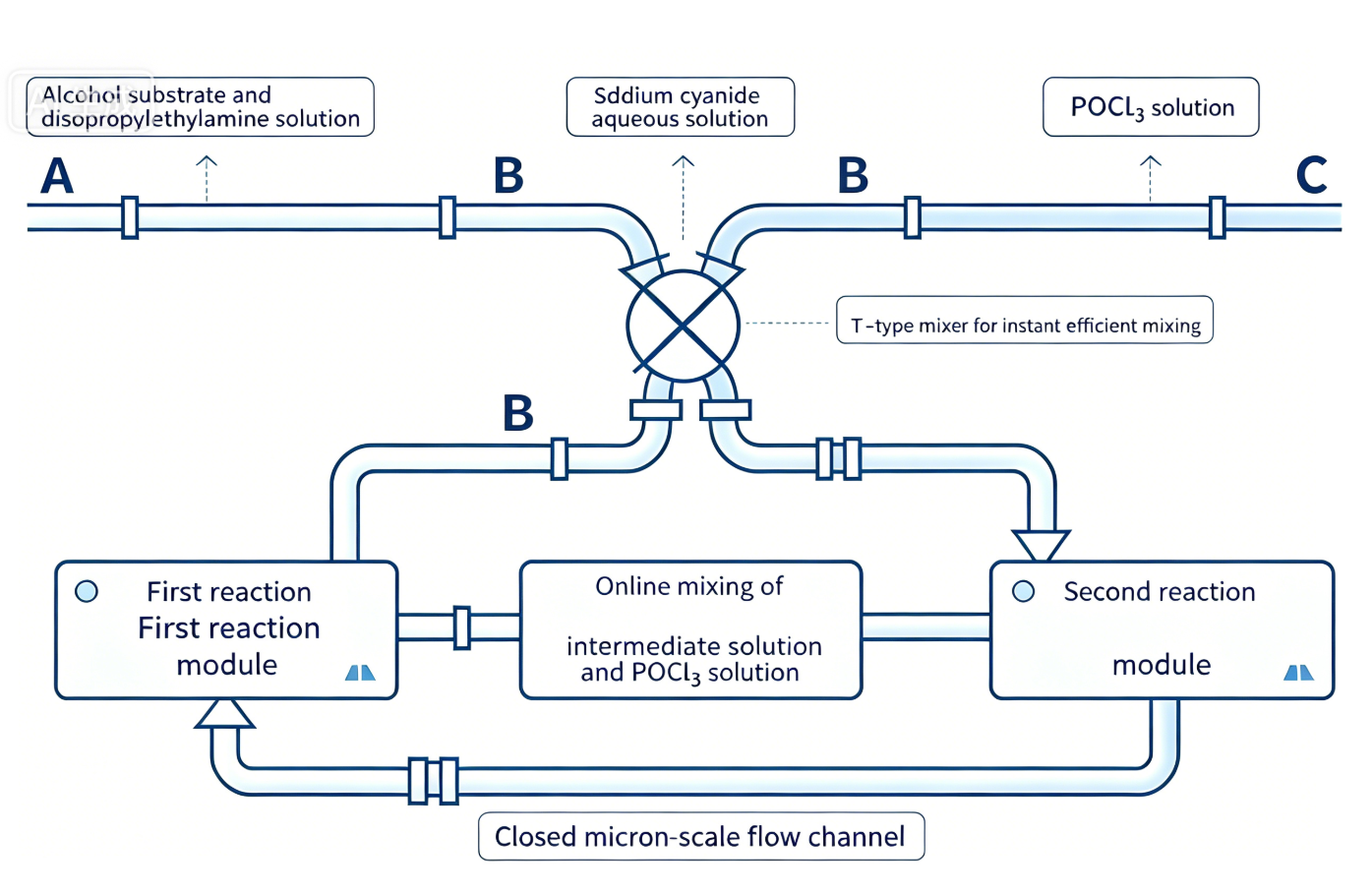
Cyanation Reaction: Low-temperature batch feeding → Online continuous reaction
II. Comprehensive Benefits of the Continuous-Flow Process
- Improved Yield and Production Efficency
- Traditional batch processes typically take several days to complete, with an overall yield of approximately 50%; the continuous-flow process reduces production time to a few hours and increases the overall yield to over 90%.
- Safety Guarantee
Safety Derived from the System’s Design High-risk reagents are always contained within a sealed system with low liquid volume, minimizing inventory levels (the “instantaneous inventory” concept); intense exothermic reactions are immediately removed, eliminating the risk of thermal runaway.
- Stable Product Quality
- Precise control of temperature and reaction time results in a more stable impurity profile, facilitating subsequent purification and quality control, and better meeting pharmaceutical regulatory requirements.
- Flexible Capacity Expansion
Modular continuous-flow equipment has a short deployment cycle; capacity can be increased simply by adding parallel reaction units, enabling a rapid response to changes in market demand.
- Green Production
- High selectivity reduces byproduct formation while lowering solvent consumption, in line with the principles of green chemistry.
The remdesivir case study demonstrates that the value of continuous-flow chemistry lies in shifting the synthesis logic from “step-by-step batch processing with intermediate separation” to “continuous transformation and online integration.” When handling highly toxic or explosive reagents, strongly exothermic reactions, or unstable intermediates, the advantages of continuous-flow processes and microchannel reactors—including intrinsic safety, precise temperature control, stable scale-up, and automated operation—become even more evident.

About Shenshi
MicroSmart (a subsidiary of Shen’s Technology) specializes in the R&D of micro-continuous flow processes and system equipment. Its product portfolio includes microchannel reactors, microchannel heat exchangers, and tubular reactors. Leveraging mature equipment platforms and engineering implementation experience, the company provides comprehensive solutions ranging from process development and pilot-scale validation to industrial-scale upscaling.