Home / All / Microchemical & Industrial Processes / Continuous-flow synthesis of empagliflozin via microchannels: temperature-controlled formation of C-glycosidic bonds at low temperatures, reaction time shortened to the range of seconds to minutes, with purity up to 99%
Continuous-flow synthesis of empagliflozin via microchannels: temperature-controlled formation of C-glycosidic bonds at low temperatures, reaction time shortened to the range of seconds to minutes, with purity up to 99%

Nov 13,2026

Continuous-flow synthesis of empagliflozin via microchannels: temperature-controlled formation of C-glycosidic bonds at low temperatures, reaction time shortened to the range of seconds to minutes, with purity up to 99% 


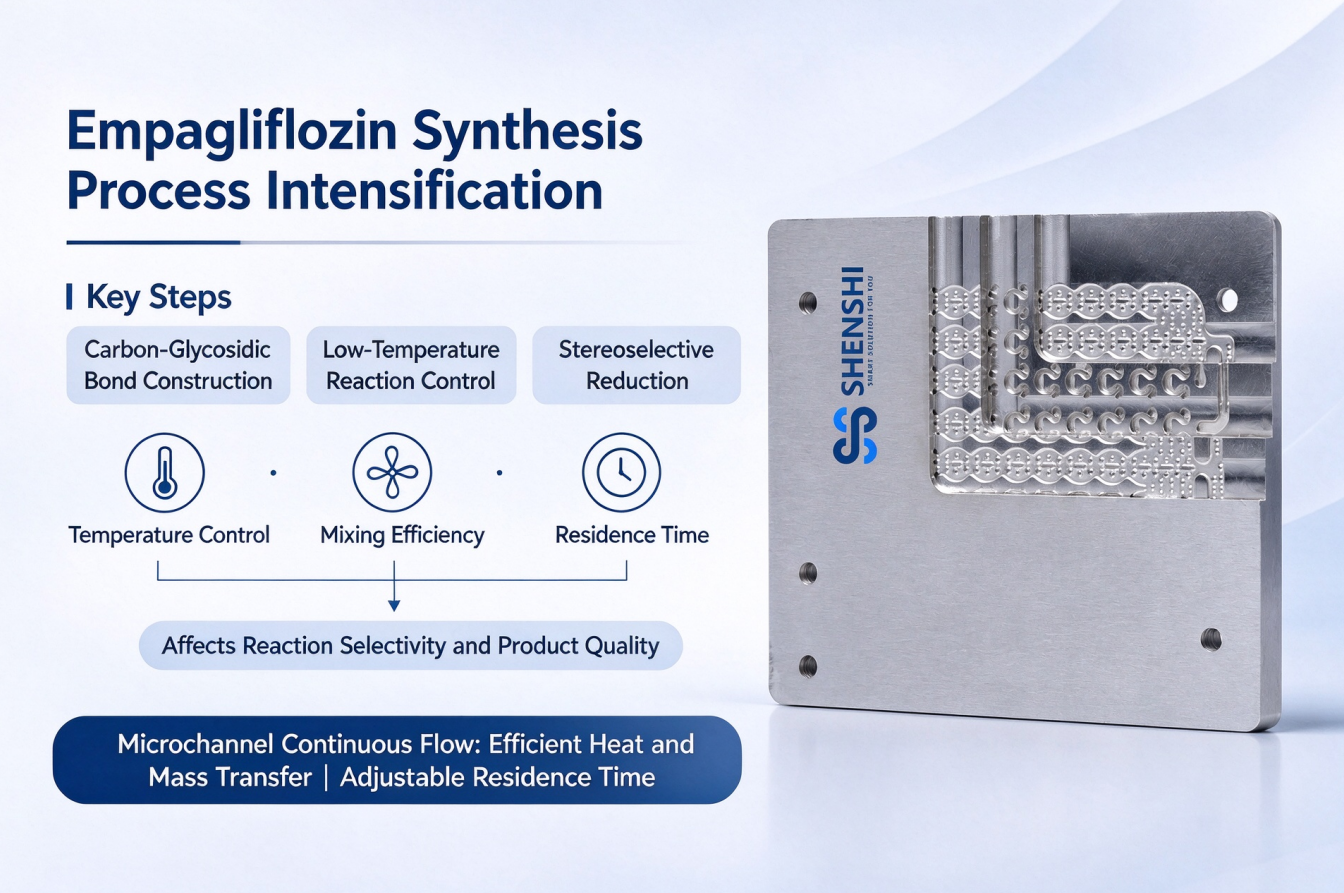
The synthesis of empagliflozin involves key steps such as the construction of the C-glycosidic bond, low-temperature reaction control, and subsequent stereoselective reduction. For reactions of this type, temperature control, mixing efficiency and residence time directly affect reaction selectivity and product quality. Continuous-flow microchannel reactors enhance heat and mass transfer through the size effect of microchannels and enable precise regulation of residence time via continuous-flow operation, providing a process intensification route for the relevant steps.
Image

I. Empagliflozin and Its Synthetic Characteristics 


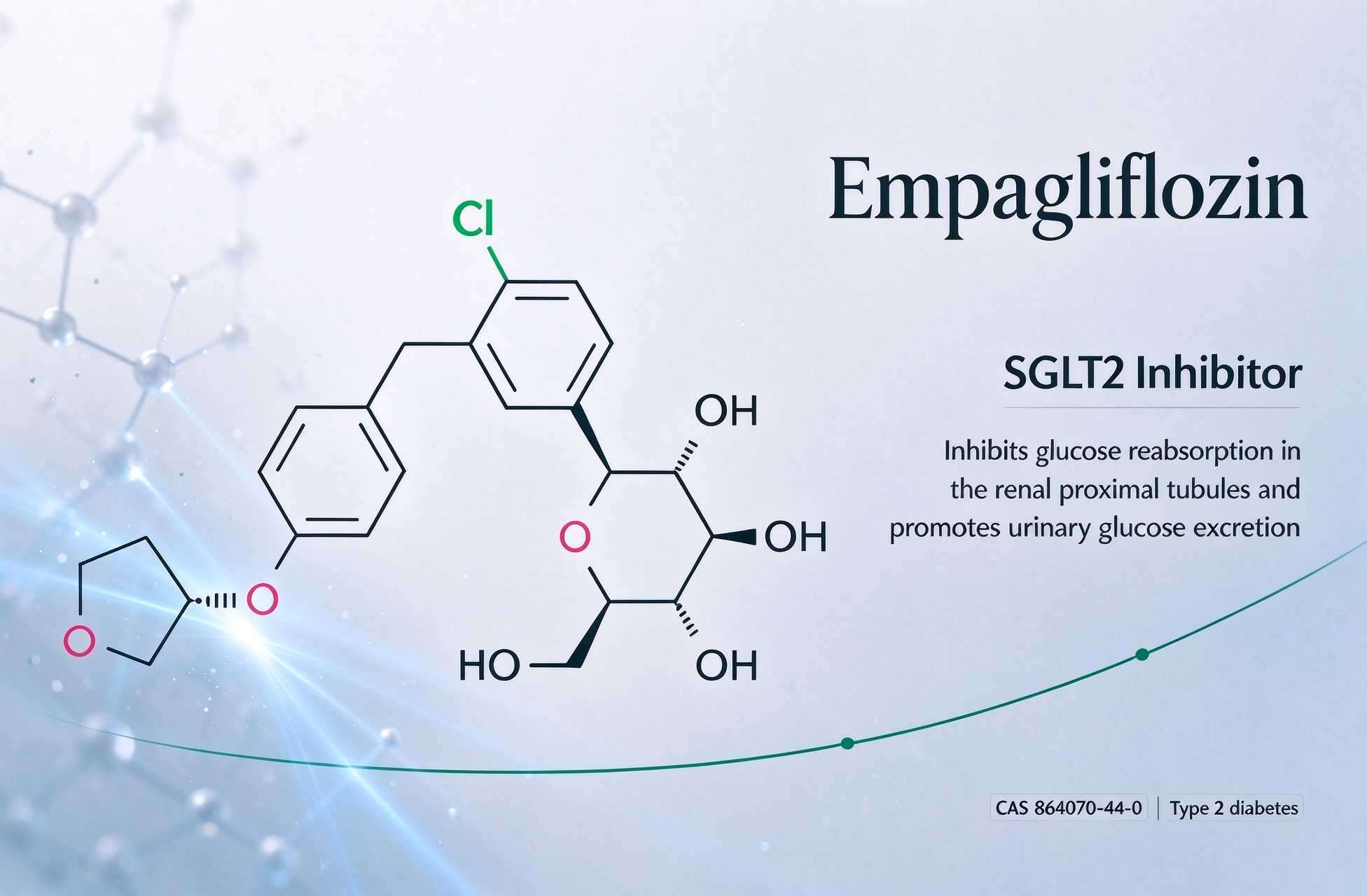
Empagliflozin (chemical formula C23H27ClO7, CAS No. 864070-44-0) is a sodium-glucose cotransporter 2 (SGLT2) inhibitor, an oral medication used for the treatment of type 2 diabetes mellitus. Its mechanism of action is to inhibit the reabsorption of glucose in the proximal renal tubules, promote the excretion of glucose in urine, and help lower blood glucose levels.

The key to its synthesis is to couple the aryl fragment with the glycosyl fragment to construct the target C-glycosidic bond and obtain the required stereoconfiguration. Steps involving organometallic reagents are sensitive to temperature, feeding sequence and mixing state. The main technical challenge lies in whether the low-temperature construction of the C-glycosidic bond can proceed stably within a controllable temperature window and under defined mixing conditions.

 II. Engineering Bottlenecks of the Traditional Batch Reactor Route 

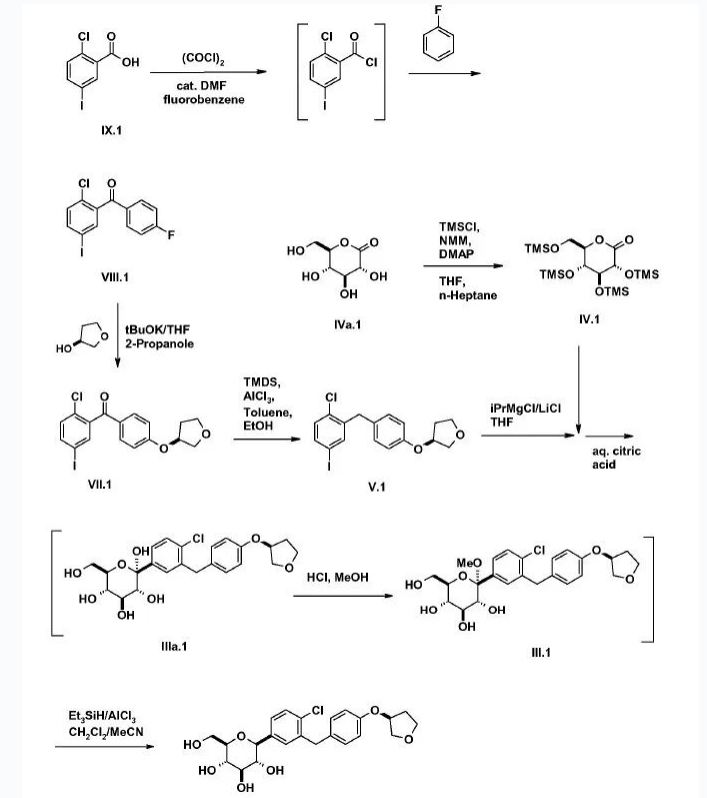
The mainstream batch synthesis process for empagliflozin adopts a convergent route: two major fragments of the drug are constructed separately, then linked via one key coupling reaction, followed by several functional group transformations to obtain the final product. Throughout the synthetic pathway, the most critical and challenging step is the formation of the central C-glycosidic bond at low temperature using an organolithium reagent or a Grignard reagent. The main steps include:

1. Construction of glycosyl donor: D-gluconolactone is protected with trimethylsilyl (TMS) group to afford highly active 2,3,4,6-tetra-O-trimethylsilyl-D-glucono-1,5-lactone.

2. Construction of aglycone fragment: Using 2-chloro-5-iodobenzoic acid as the starting material, the aryl iodide intermediate bearing a tetrahydrofuran ring side chain is prepared via Friedel-Crafts acylation, reduction, nucleophilic substitution and other reactions.

3. Key coupling reaction (low-temperature operation): Under cryogenic conditions (e.g., -78 ℃ to -60 ℃) and inert gas protection, a strong base such as n-butyllithium (n-BuLi) is applied to undergo halogen-metal exchange with the aryl iodide to generate the reactive arylmetal intermediate, which then reacts with the glycosyl donor to form the C-glycosidic bond.

4. Subsequent transformation and deprotection: The adduct undergoes methylation, stereoselective reduction using triethylsilane (Et₃SiH) together with boron trifluoride diethyl etherate (BF₃·OEt₂) or aluminium trichloride (AlCl₃), followed by final deprotection and purification to obtain high-purity empagliflozin.
Image

This process has three major engineering bottlenecks:
  • Ultra-low-temperature reaction with difficult temperature control: The key step in empagliflozin synthesis — introducing a glucosyl group via a C-glycosidic bond at the para-chloro position of the benzene ring — usually needs to be carried out at an extremely low temperature to regulate the reaction rate. Batch reactors feature low heat transfer rates. Improper temperature control can easily trigger a rapid temperature rise and run-away reaction risks.
  •  Inhomogeneous mixing of materials: Mechanical stirring fails to achieve sufficient mixing, resulting in low raw material conversion, increased by-products, and impaired yield and purity.
  • Long reaction duration: Multi-step reactions often take several hours to more than ten hours, leading to long cycles, high energy consumption and limited production capacity.
 Image

III. Continuous-flow Microchannel Scheme
The core of a continuous-flow microchannel reactor relies on heat transfer with a high specific surface area, mixing via short diffusion paths, and precisely adjustable residence time to bring reactions that require extremely low-temperature control into a more stable and engineerable operating window.

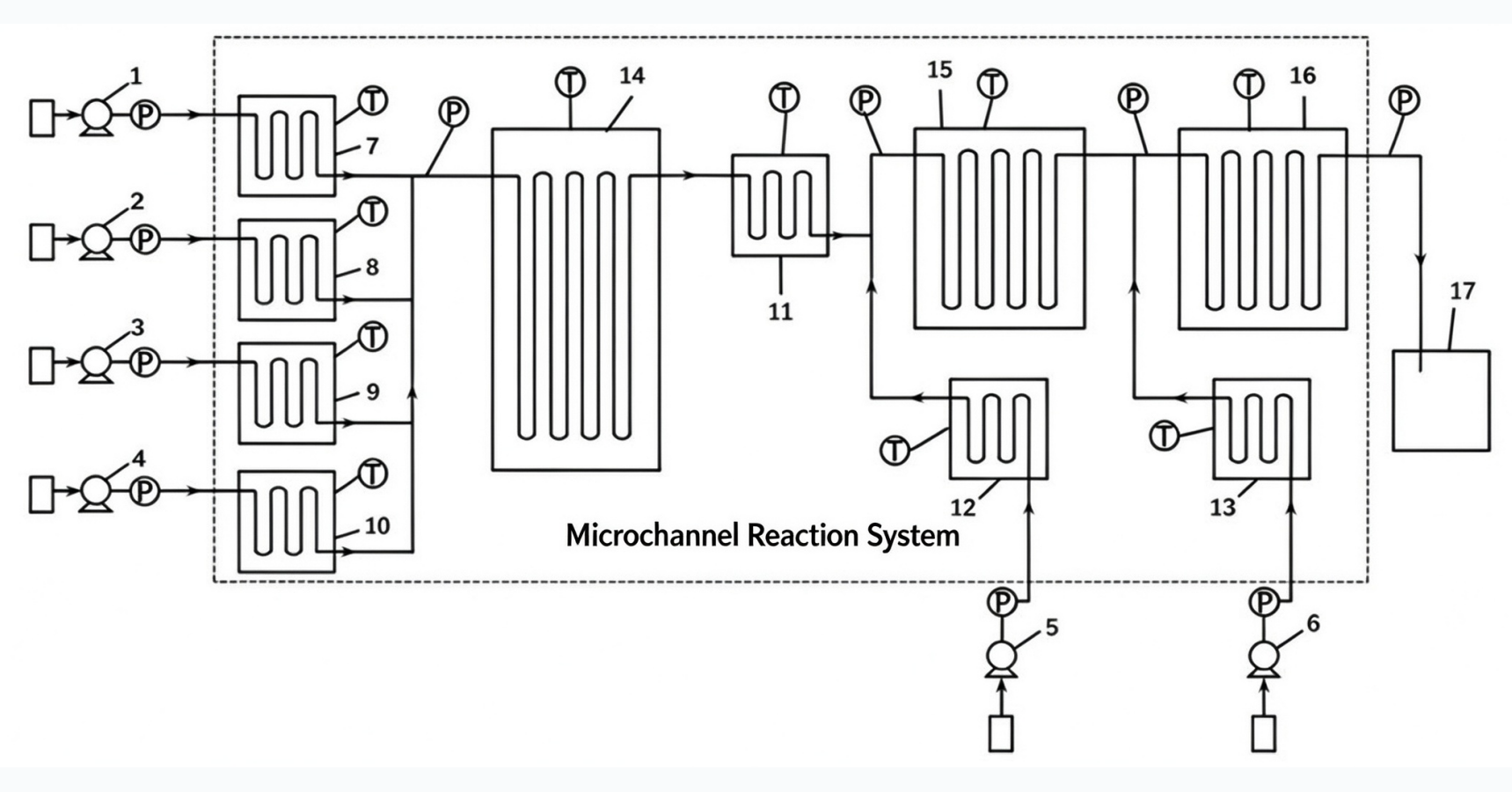
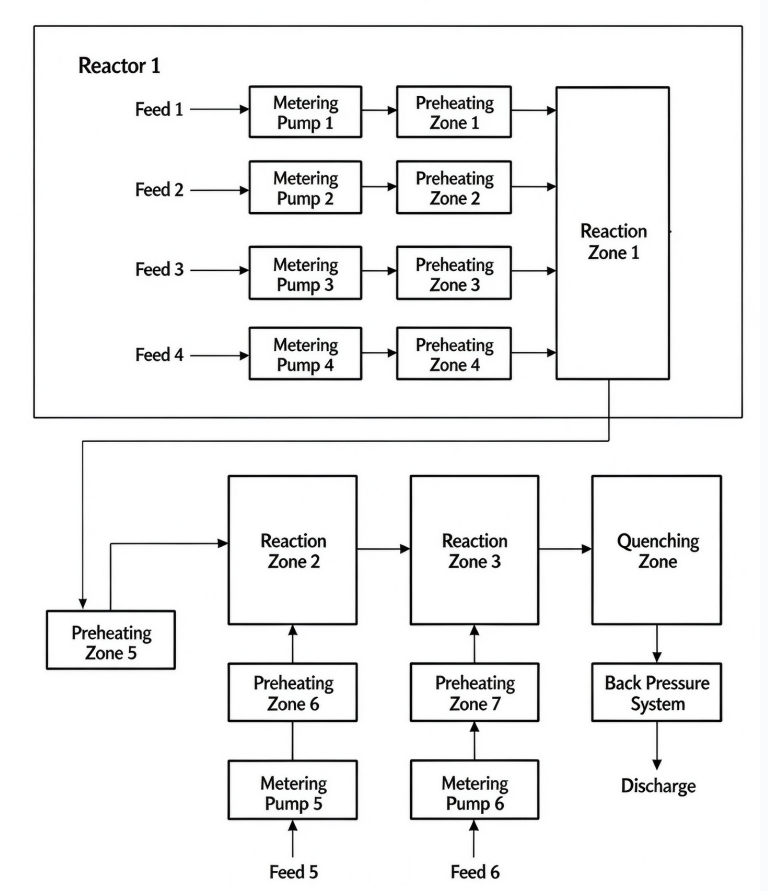
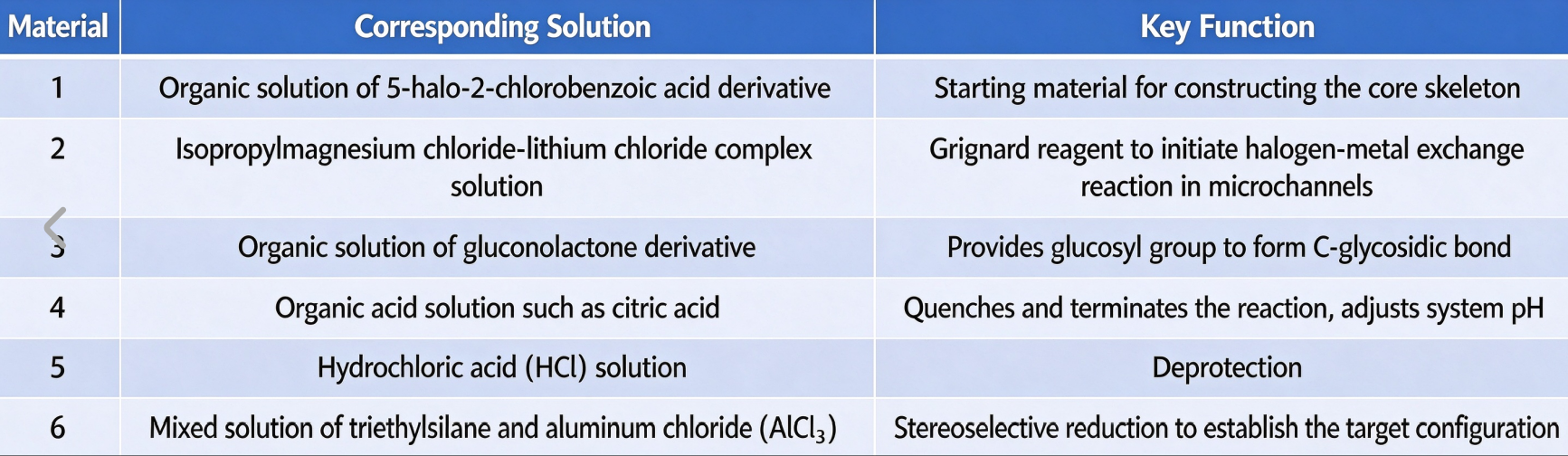
In a specific continuous-flow process scheme, materials are divided into multiple independent feed streams according to process functions, such as organometallic reagents, glycosyl donors, quench acids, deprotection acids, and reduction systems, which are separately delivered to the microchannel reactor system via metering pumps.

Image


Following the above device process, the reaction can be summarized into three stages.
1. Halogen–metal exchange and nucleophilic addition
Material 1 and Material 2 are thoroughly mixed via a static mixer and then fed into microchannel reactor Ⅰ to generate an active intermediate. The intermediate is further mixed with Material 3 and introduced into microchannel reactor Ⅱ, where nucleophilic addition is completed in the subsequent reaction zone to construct the C-glycosidic bond.
2. Quenching and deprotection
The reaction solution is mixed with Material 4 (organic acid) in the quenching zone to terminate the reaction, and then reacts with Material 5 (hydrochloric acid) to remove the glucose protecting groups.
3. Stereoselective reduction
The reaction solution is mixed with Material 6 (triethylsilane/aluminum trichloride) and enters microchannel reactor Ⅲ to accomplish stereoselective reduction, yielding high-purity empagliflozin product.

Image

Key technical effects:

  • Reaction Time   Shorten from several hours to tens of seconds to several minutes.
  • Product Purity It can reach 97%–99%, and the yield is at the level of 81%–92%.
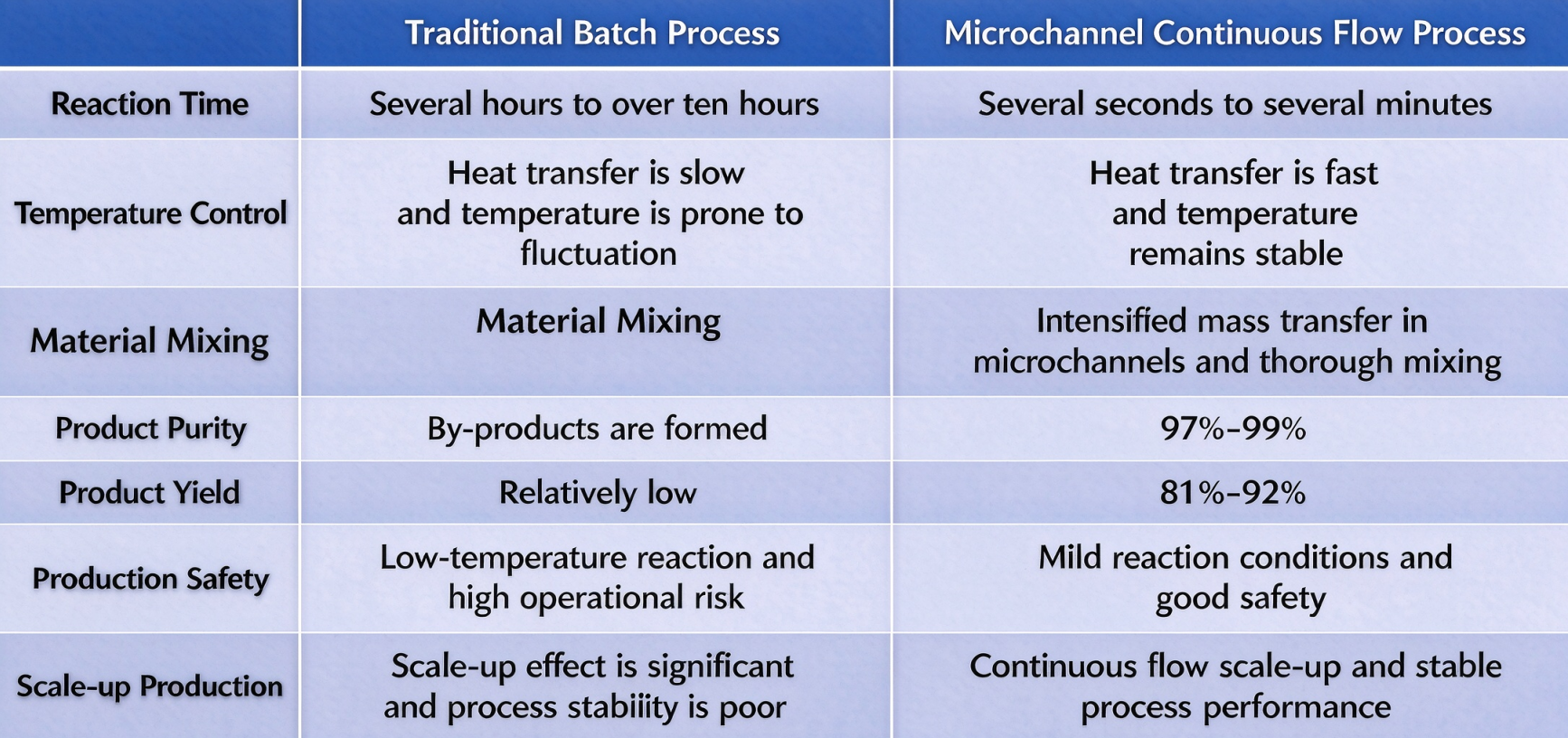
Microchannel reactors feature high heat and mass transfer efficiency and a small reaction holdup volume, which help maintain a constant reaction temperature, reduce the risk of thermal runaway from the perspective of heat transfer mechanism, and improve process safety.

In addition, the microchannel reaction preparation process for the intermediate is further optimized. By connecting microchannel reactors in series, the heat and mass transfer efficiency is greatly improved, the formation of by‑products is effectively inhibited, and the process has mild reaction conditions, simple operation and convenient post‑treatment.

Continuous flow tubular reactors also show application value in the intermediate synthesis stage. For example, in the patented scheme of Jiangsu Alpha Pharmaceutical, a continuous flow tubular reactor is adopted for catalytic hydrogenation reduction. The reaction takes only 50 seconds at room temperature, the overall yield of the three steps reaches 75.9%, and the purity of the intermediate is about 99.6%.

Image

IV. Batch Reactor and Microchannel Continuous Flow: Comparison of Process Differences
The exploration of the continuous-flow process for empagliflozin demonstrates the capability of microchannel technology to precisely regulate reaction conditions, mixing efficiency and reaction progress in pharmaceutical synthesis. For drug synthesis involving multi-step reactions, the application of continuous-flow processes also needs to align with the characteristics of each reaction step to realize process interconnection, equipment adaptation and continuous operation validation.

The realization of the above process advantages ultimately relies on the engineering design and continuous operation stability of the microchannel system. Taking processes such as that of empagliflozin, which involve low-temperature organometallic reagents and multi-step continuous transformations, EPC delivery needs to focus on addressing heat exchange design for low-temperature sections, metering accuracy of multiple feed streams, and residence time matching for quenching/reduction sections. These are issues that require integrated consideration at the stages of process development and equipment selection.

Shenshi Microflow Source specializes in the R&D of microchemical continuous-flow processes and system equipment. Serving industries including pharmaceuticals and fine chemicals, it has established a four-step full-process turnkey EPC delivery system. Its services cover continuous-flow process feasibility assessment, process development and industrial design, equipment selection and delivery, as well as on-site installation, commissioning and industrial startup, providing integrated solutions for continuous-flow process development and industrial application.

What the exploration of continuous-flow synthesis of empagliflozin fundamentally transforms is the control mode of low-temperature, highly exothermic steps: temperature, mixing and residence time are directly governed by the transport characteristics of equipment, and process stability no longer mainly depends on operational experience. As continuous-flow technology continues to mature, the industrialization of challenging drug synthesis steps will depend more on transport process design and continuous operation validation, through which efficiency, safety and green development can also be achieved.

About Shenshi

Founded in 2005, Hangzhou Shenshi Energy Conservation Technology Co., Ltd. (SHENSHI) is a high-tech enterprise specializing in energy-efficient heat transfer and microreaction technologies. As a pioneer in low-carbon thermal management, Shenshi designs and manufactures high-performance heat exchangers serving industries such as energy, marine & offshore engineering, and hydrogen.