
Empowering Green Shipping: Advanced PCHE Solutions for LNG FGSS at Korea Ocean Expo 2026
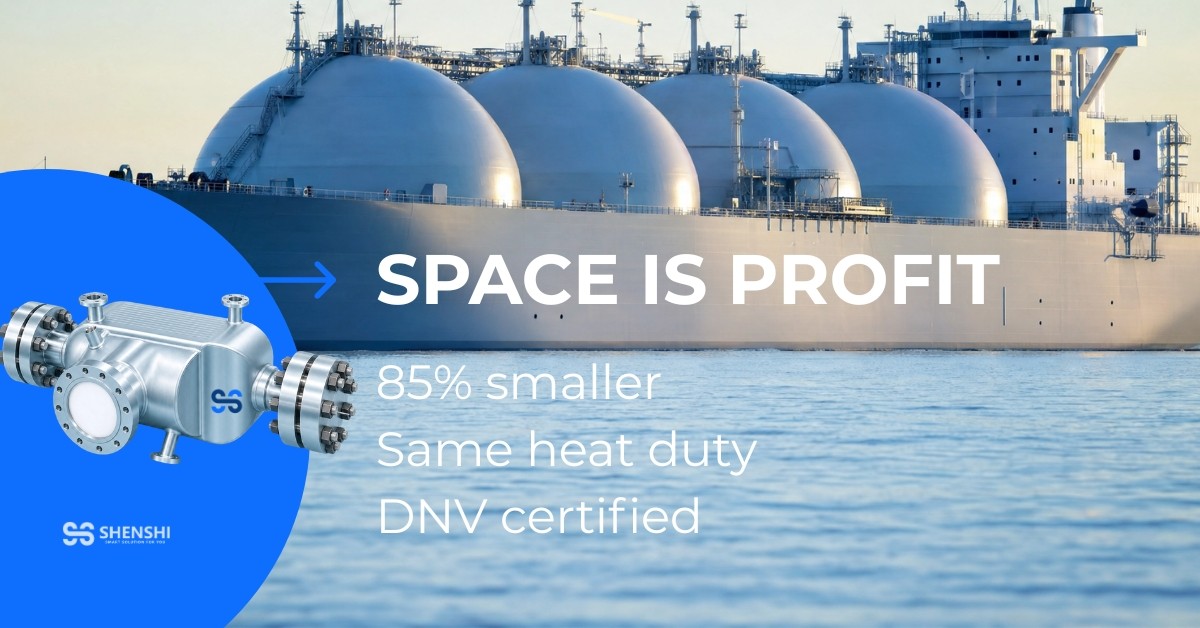
The Future of Green Shipping: How Compact Marine Heat Exchangers Power LNG FGSS
As the global maritime industry rapidly transitions toward a more sustainable future, shipowners and marine engineers are facing unprecedented pressure to reduce greenhouse gas emissions. The upcoming Korea Ocean Expo 2026, scheduled for June 17-19 at the Songdo ConvensiA in Incheon, highlights "Eco-friendly Technology" as a central theme. Among the most critical innovations driving this transition are advanced marine heat exchangers designed for alternative marine fuels.
In this comprehensive guide, we will explore the pivotal role of highly efficient thermal management solutions in modern LNG Fuel Gas Supply Systems (FGSS) and how cutting-edge technologies like Printed Circuit Heat Exchangers (PCHE) are reshaping the landscape of green shipping.
The Rising Demand for LNG and Alternative Marine Fuels
The International Maritime Organization (IMO) has set ambitious targets to decarbonize the shipping industry. As a result, the adoption of liquefied natural gas (LNG) as a transitional marine fuel has surged. LNG significantly reduces sulfur oxides (SOx), nitrogen oxides (NOx), and particulate matter compared to traditional heavy fuel oil.
- Space and Weight Constraints: Traditional heat exchangers are bulky and heavy, consuming valuable cargo space.
- Extreme Operating Conditions: Must withstand cryogenic temperatures (-162°C) and high pressures exceeding 300 bar.
- Harsh Marine Environments: Constant exposure to corrosive saltwater, humidity, and mechanical vibrations.
The Power of Printed Circuit Heat Exchangers (PCHE)
The Printed Circuit Heat Exchanger (PCHE) represents a quantum leap in thermal engineering. Manufactured using chemical etching and solid-state diffusion bonding, PCHEs create a single, solid block of metal with intricate microchannel pathways.
- Unmatched Compactness: Reduces volume by up to 85% and weight by 70% compared to conventional designs.
- Exceptional Tolerance: Safely handles pressures up to 100 MPa and temperatures from -200°C to +900°C.
- Marine-Grade Reliability: Available in titanium alloys and Hastelloy, with DNV and CCS certifications.
Comparing Marine Heat Exchanger Technologies
| Performance Metric | Traditional Shell-and-Tube | Shenshi PCHE / Plate & Shell |
|---|---|---|
| Footprint / Volume | Baseline (100%) | Up to 85% Smaller |
| Weight | Baseline (100%) | Up to 70% Lighter |
| Maximum Pressure | Typically ≤ 25 MPa | Up to 100 MPa |
| Temperature Range | Limited | -200°C to +900°C |
| Marine Certification | Varies by manufacturer | DNV, CCS Certified |
Join the Green Shipping Revolution at Korea Ocean Expo 2026. Visit Shenshi at Booth G122 from June 17-19 at Songdo ConvensiA in Incheon to discover how our customized LNG FGSS heat exchangers can optimize your next shipbuilding project.
About Shenshi
Founded in 2005, Hangzhou Shenshi Energy Conservation Technology Co., Ltd. (SHENSHI) is a high-tech enterprise specializing in energy-efficient heat transfer and microreaction technologies. As a pioneer in low-carbon thermal management, Shenshi designs and manufactures high-performance heat exchangers serving industries such as energy, marine & offshore engineering, and hydrogen.