
How to Prevent Freezing in LNG Vaporization Systems | FGSS Anti-Freezing Heat Exchanger Solution
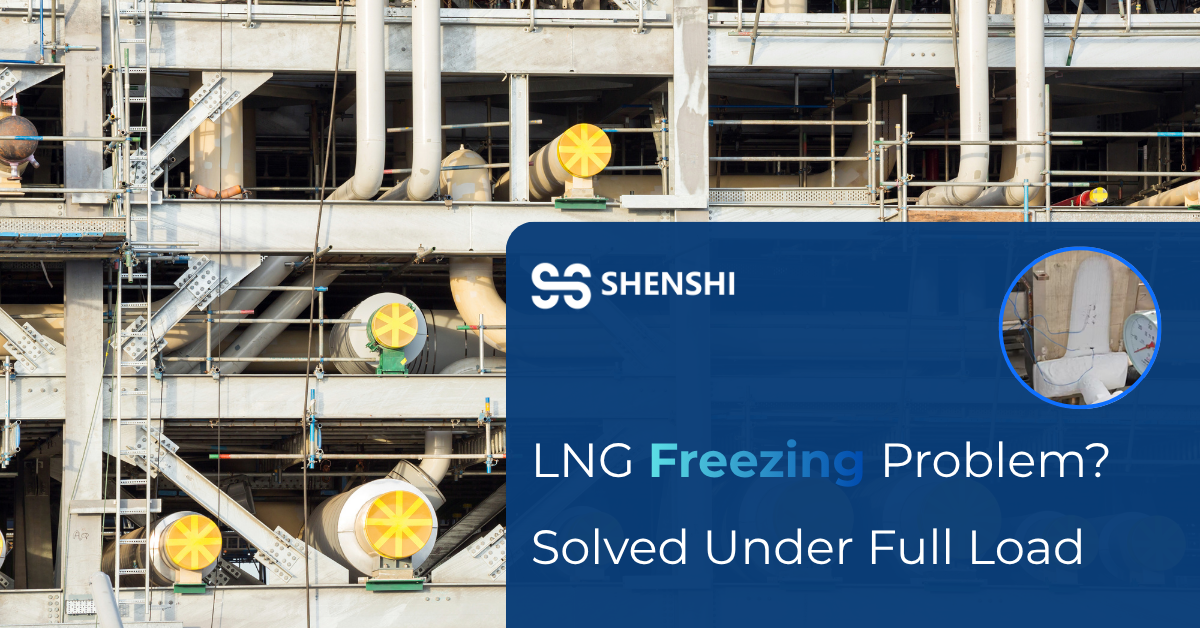
How to Prevent Freezing in LNG Vaporization Systems | SHENSHI FGSS Anti-Freezing Heat Exchanger Solution
In modern LNG-powered vessels and industrial gas systems, maintaining stable vaporization is critical for operational safety and efficiency. However, when LNG exchanges heat with an ethylene glycol–water solution, freezing becomes a persistent engineering challenge. SHENSHI's patented anti-freezing heat exchanger design addresses this challenge at its root, enabling freeze-free operation even under full-load conditions.
1. Problem: Freezing Risks in LNG Vaporization Systems
Localized cold spots within conventional LNG vaporizers can trigger a cascade of operational problems. When LNG exchanges heat with an ethylene glycol–water solution, non-uniform temperature distribution creates zones where freezing is highly likely to occur. These cold spots can lead to:
- Surface frosting on heat transfer walls
- Internal ice formation
- Reduced heat transfer efficiency
- Unstable gas output under fluctuating loads
In severe cases, these issues can force partial or complete system shutdowns, directly impacting FGSS (Fuel Gas Supply System) reliability and overall vessel or plant operations.
2. Why Conventional Anti-Freezing Solutions Fall Short
Industry-standard approaches to managing freezing in LNG vaporization systems typically include increasing glycol flow rate, raising inlet temperature, and oversizing heat exchangers. While these methods may delay the onset of freezing, they do not eliminate the root cause — non-uniform temperature distribution and localized thermal imbalance inside the heat exchanger.
As a result, freezing risks persist, especially under full-load or transient operating conditions common in marine LNG applications. The fundamental problem remains unresolved, leaving operators exposed to recurring maintenance demands and unplanned downtime.
3. Solution: SHENSHI Patented Anti-Freezing Heat Transfer Design
To address these limitations, SHENSHI has developed a patented anti-freezing heat exchanger design, engineered specifically for cryogenic LNG applications. Rather than managing symptoms, this solution targets the underlying thermal imbalance that causes freezing in the first place.
Key design principles include:
- Optimized flow distribution across channels
- Controlled thermal gradients to avoid cold spots
- Elimination of ice nucleation zones at critical interfaces
This advanced cryogenic heat exchanger design ensures that heat transfer remains continuous and stable throughout operation, regardless of load variations or ambient conditions.
4. Result: Freeze-Free Operation Under Full Load
With SHENSHI's solution, LNG vaporization systems can achieve a new standard of operational reliability. The patented design delivers:
- Stable vaporization under full-load conditions
- No internal freezing or surface frosting
- Consistent gas output for FGSS systems
- Sustained high-efficiency thermal performance
This translates into tangible operational and economic benefits, including reduced operational risk, improved system uptime, and lower maintenance and lifecycle costs across the entire service life of the equipment.
5. Applications in FGSS Systems
SHENSHI's anti-freezing heat exchanger technology is widely applied across the full spectrum of LNG fuel gas supply chain equipment, ensuring reliable performance at every stage of the process:
- High-pressure LNG vaporizers
- Low-pressure vaporizers
- LNG preheaters
Whether deployed on LNG-powered vessels, floating storage and regasification units (FSRUs), or onshore industrial gas facilities, SHENSHI's solution provides consistent freeze protection across diverse operating environments and load profiles.
6. Conclusion
Freezing in LNG vaporization is not merely an operational inconvenience — it is a fundamental design challenge that demands a fundamental design solution. Conventional workarounds that address symptoms rather than causes leave FGSS systems vulnerable to recurring failures, especially under the demanding conditions of full-load marine or industrial operation.
By addressing the root causes at the heat transfer level, SHENSHI delivers a globally applicable anti-freezing solution that enables stable, efficient, and uninterrupted LNG system performance. The result is a more reliable FGSS, lower total cost of ownership, and greater confidence in the safety and continuity of LNG-powered operations worldwide.
About Shenshi
Founded in 2005, Hangzhou Shenshi Energy Conservation Technology Co., Ltd. (SHENSHI) is a high-tech enterprise specializing in energy-efficient heat transfer and microreaction technologies. As a pioneer in low-carbon thermal management, Shenshi designs and manufactures high-performance heat exchangers and micro-reactors serving industries such as energy, marine & offshore engineering, hydrogen, pharmaceuticals, and advanced manufacturing.
With solutions deployed across more than 40 countries, Shenshi is committed to delivering reliable, efficient, and sustainable thermal technologies for demanding industrial applications.