
Microchannel Reactor–Enabled Continuous Flow Pinnick Oxidation Achieving Safe, High-Efficiency Synthesis in Just 3 Minutes
Pinnick Oxidation in Pharmaceutical and Fine Chemical Synthesis
Pinnick oxidation is widely applied in pharmaceutical and fine chemical manufacturing due to its excellent functional group tolerance, particularly for the oxidation of α,β-unsaturated aldehydes to the corresponding carboxylic acids. However, when conducted in conventional batch reactors, the process faces significant challenges including safety risks, narrow operating windows, and limited efficiency.
Continuous Flow Breakthrough Using Microchannel Reactors
A research team led by Professor Yifeng Zhou from China Jiliang University reported a major advancement in Journal of Flow Chemistry, demonstrating continuous flow Pinnick oxidation at 120 °C and 4 MPa using a Shenshi microchannel reactor (HZSS WRC00820).
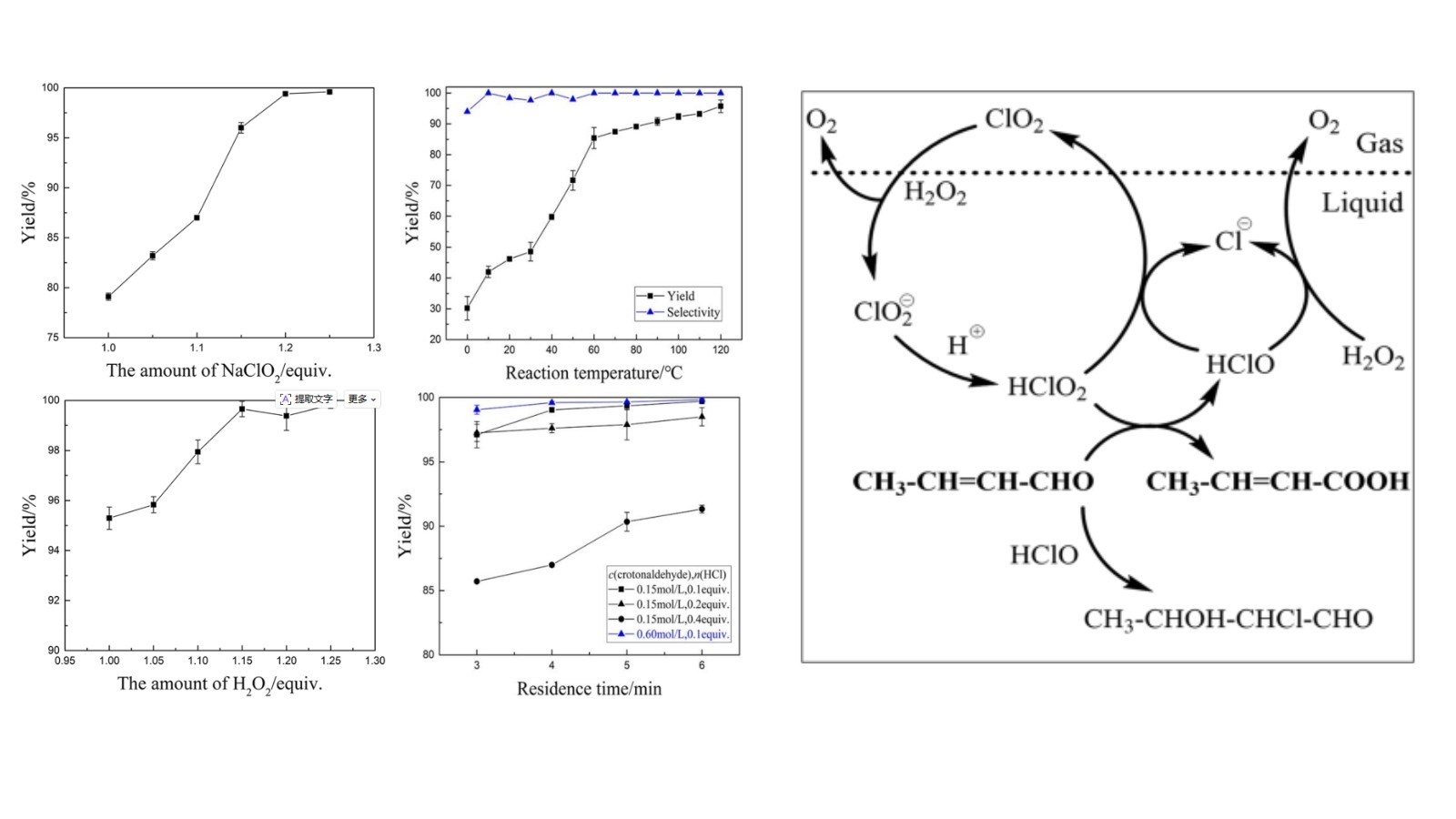
Reaction time was reduced from several hours to 3 minutes, achieving a 95.6% yield without relying on high-cost phosphate buffer salts, highlighting the advantages of process intensification.

Reaction Mechanism and Pathway Control
Crotonic acid synthesis from crotonaldehyde was selected as the model reaction. The oxidation proceeds via chlorous acid, generated in situ from sodium chlorite under acidic conditions.
Mechanistic Considerations
- Formation of a five-membered cyclic intermediate via chlorous acid addition.
- Pericyclic fragmentation with hydrogen transfer.
- Release of hypochlorous acid (HOCl) as a reactive byproduct.
To suppress side reactions induced by HOCl, a scavenger is required. Among commonly used quenchers, hydrogen peroxide provides the optimal balance between cost efficiency and downstream processing simplicity.
Intrinsic Safety and Process Intensification
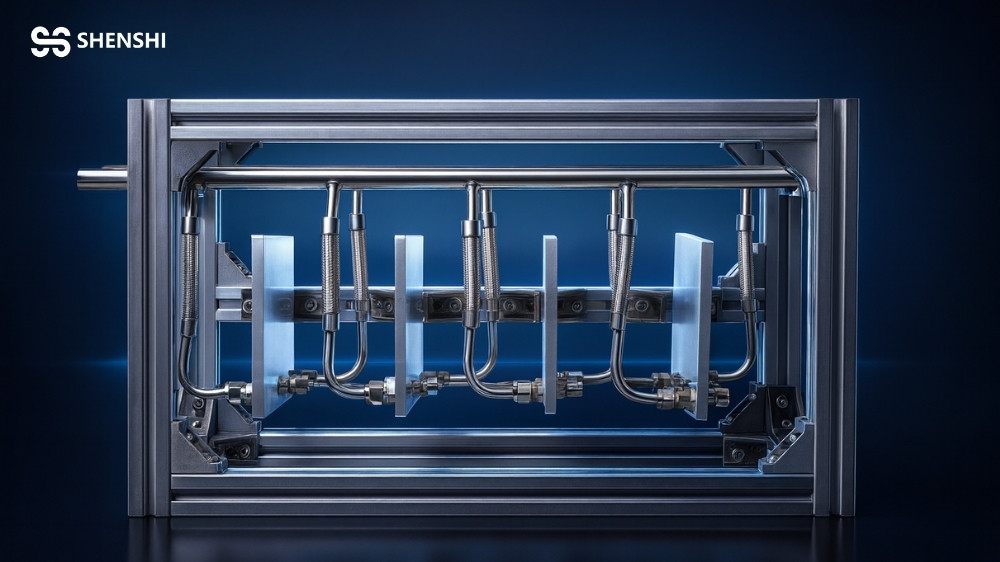
Continuous flow microreaction technology enables safe handling of gas-evolving, highly exothermic reactions involving unstable intermediates. Enhanced heat and mass transfer allow operation under conditions unattainable in conventional batch reactors.
Process Development and Continuous Operation
Reaction temperature, concentration, and feed ratios were systematically optimized. Residence time was precisely controlled through flow rate adjustment and reactor numbering (single reactor volume: 8.2 mL).
Continuous Flow Configuration
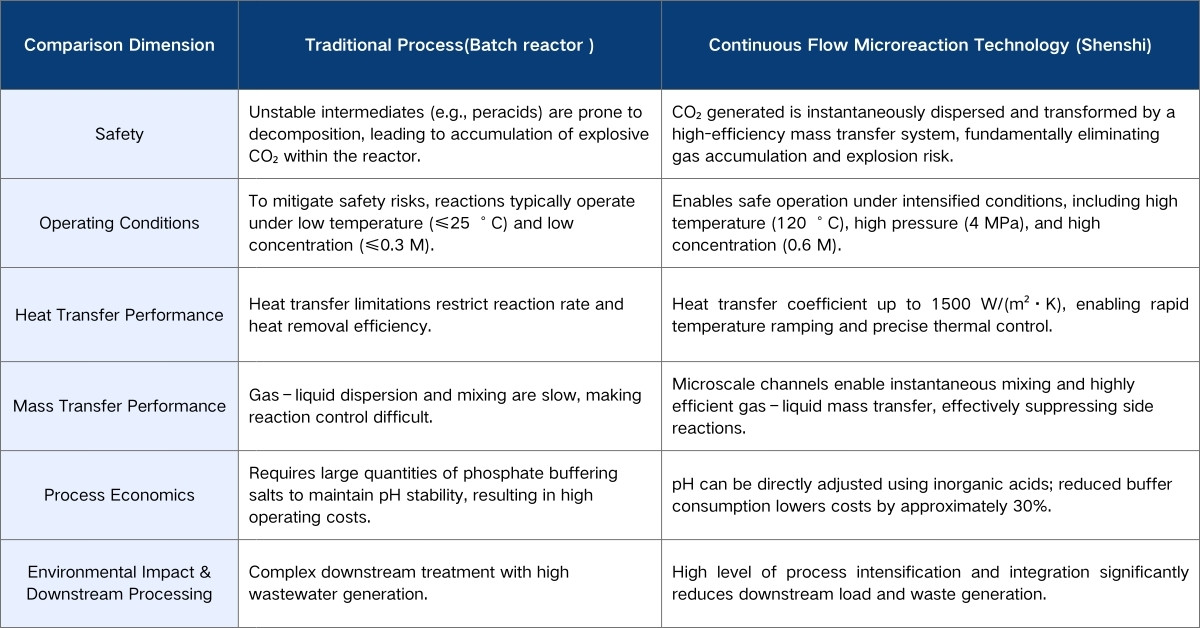
Three feed streams—crotonaldehyde in acetonitrile, aqueous sodium chlorite, and hydrogen peroxide solution—were rapidly mixed and introduced into the Shenshi microchannel reactor.
System pressure was maintained at 4 MPa, with minimal residence time deviation despite gas evolution.

Conclusion
This study demonstrates that continuous flow microreactor technology can transform Pinnick oxidation—a reaction traditionally constrained by safety and scalability— into a safe, efficient, and industrially viable process.
The results establish a new benchmark for the oxidation of α,β-unsaturated aldehydes and highlight the role of microchannel reactors in advancing green chemical manufacturing.
About Shenshi
Founded in 2005, Hangzhou Shenshi Energy Conservation Technology Co., Ltd. (SHENSHI) is a high-tech enterprise specializing in energy-efficient heat transfer and microreaction technologies. As a pioneer in low-carbon thermal management, Shenshi designs and manufactures high-performance heat exchangers and micro-reactors serving industries such as energy, marine & offshore engineering, hydrogen, pharmaceuticals, and advanced manufacturing.
With solutions deployed across more than 40 countries, Shenshi is committed to delivering reliable, efficient, and sustainable thermal technologies for demanding industrial applications.