
Optimization of the Synthetic Process of Dapagliflozin: Microchannel Continuous Flow Enables Minute-Scale Reactions with Crude Product Purity > 90%
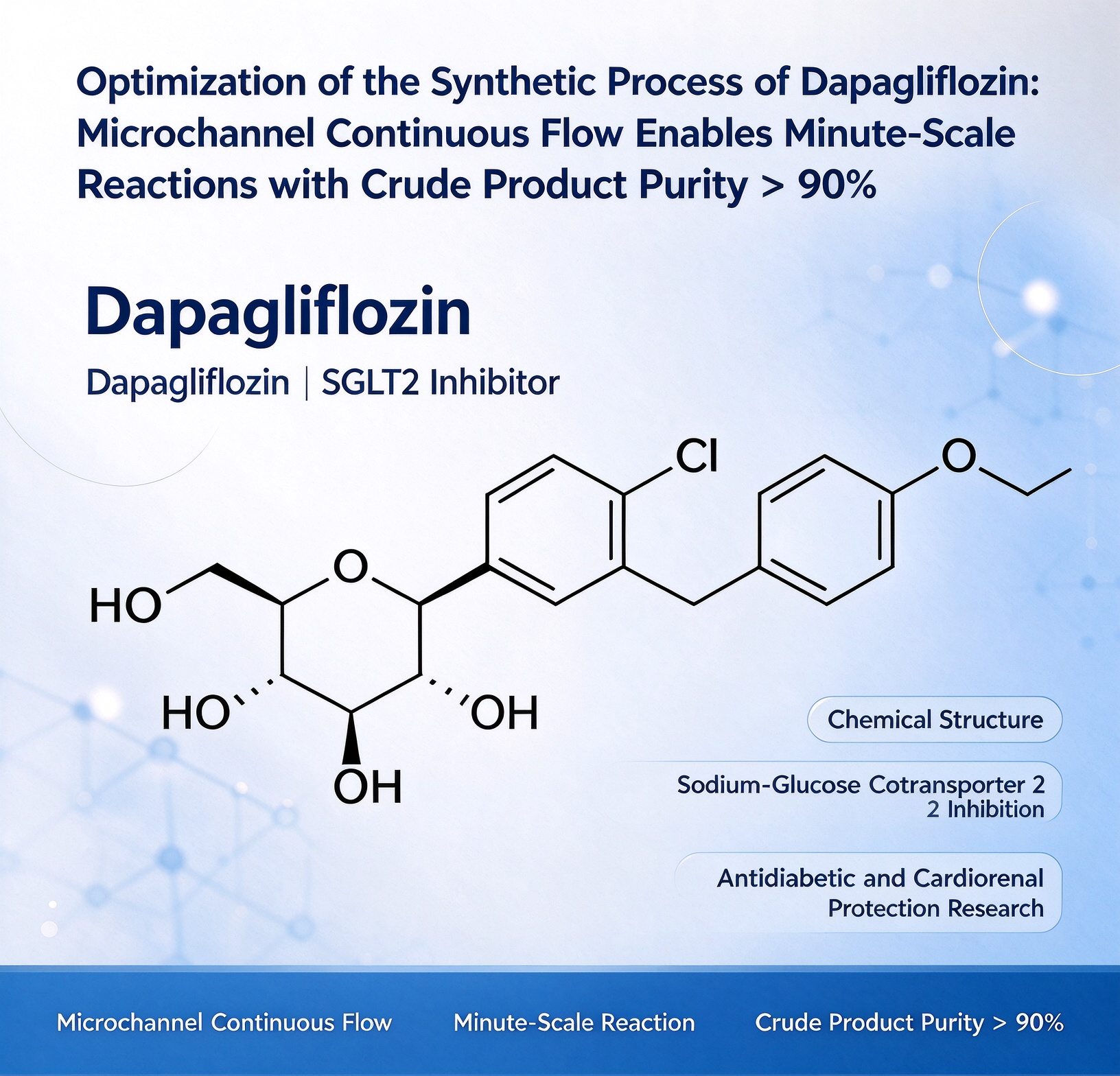
Optimization of the Synthetic Process of Dapagliflozin: Microchannel Continuous Flow Enables Minute-Scale Reactions with Crude Product Purity > 90%
Its synthesis process has long been a focus of attention in the pharmaceutical industry. In conventional synthetic routes, the coupling of key intermediates is mainly achieved via the Grignard reagent method or n-butyllithium method. At the crude product preparation stage, traditional batch reactor processes often suffer from poor selectivity, significant scale-up effects, long reaction times and other issues. Some reaction routes also impose stringent operational safety requirements.
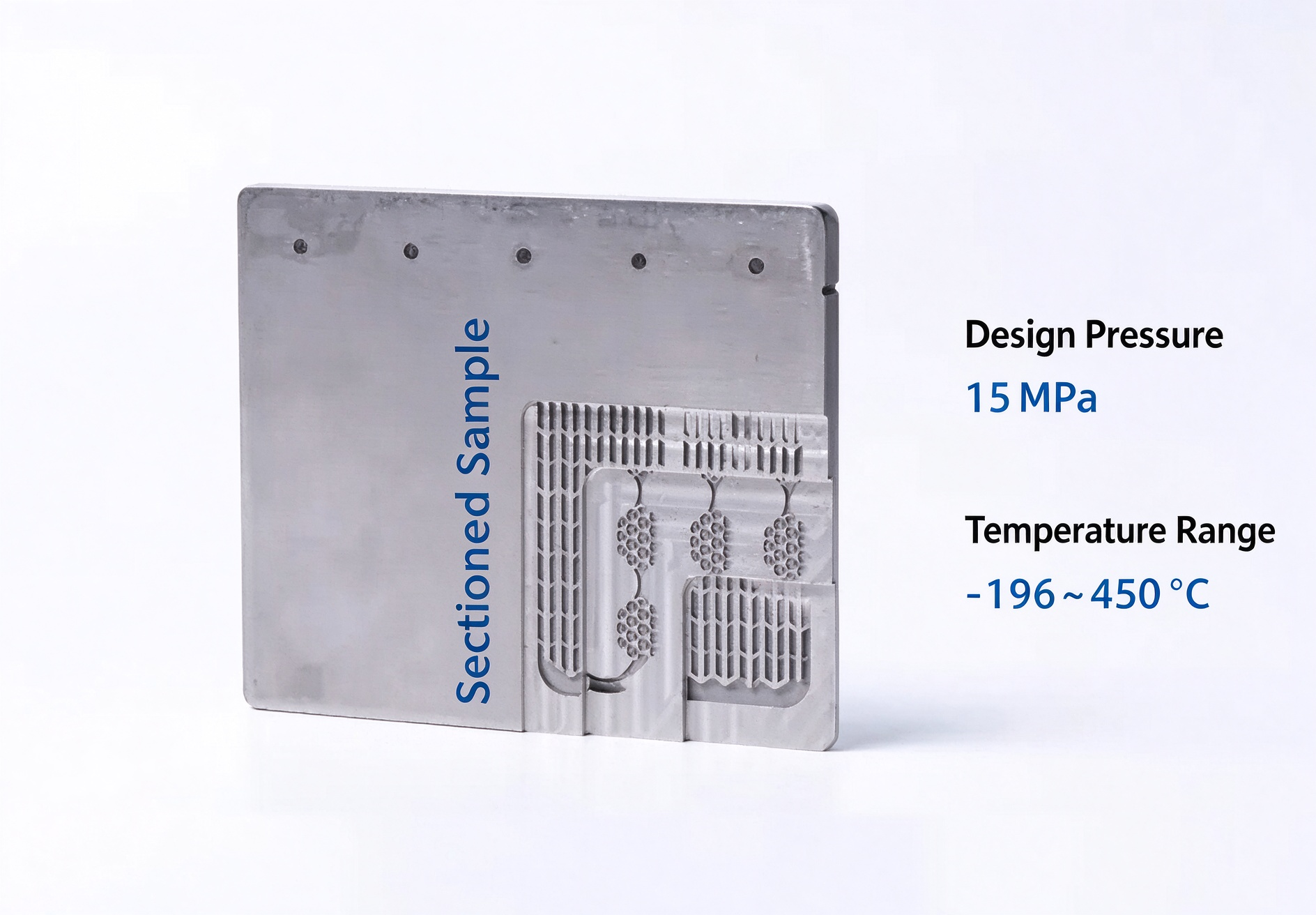
Microchannel continuous flow technology, featuring a large specific surface area, high-efficiency heat and mass transfer performance, and precise feed control, offers a new process strategy for optimizing such reactions.
- Microchannel reactors have a large specific surface area, which enhances heat transfer and mixing during reactions. They can rapidly remove reaction heat and suppress local overheating and side reactions.
- Continuous feeding enables easier control over parameters such as material ratio, temperature and residence time, improving the selectivity and process reproducibility of reduction reactions.
- Microchannel reactors have a low liquid holdup. For processes involving hazardous reactions, they reduce the inventory of materials inside the reactor and lower potential risks.
I. Stereoselectivity Control: Difficulties in the Synthetic Process of Dapagliflozin
In the existing synthetic routes, crude dapagliflozin is generally prepared using 2-chloro-5-(1-methoxy-D-glucopyranos-1-yl)-4'-ethoxydiphenylmethane as the starting material. Under the catalysis of a Lewis acid (such as boron trifluoride diethyl etherate), the methoxy group on the anomeric carbon is reduced with triethylsilane.
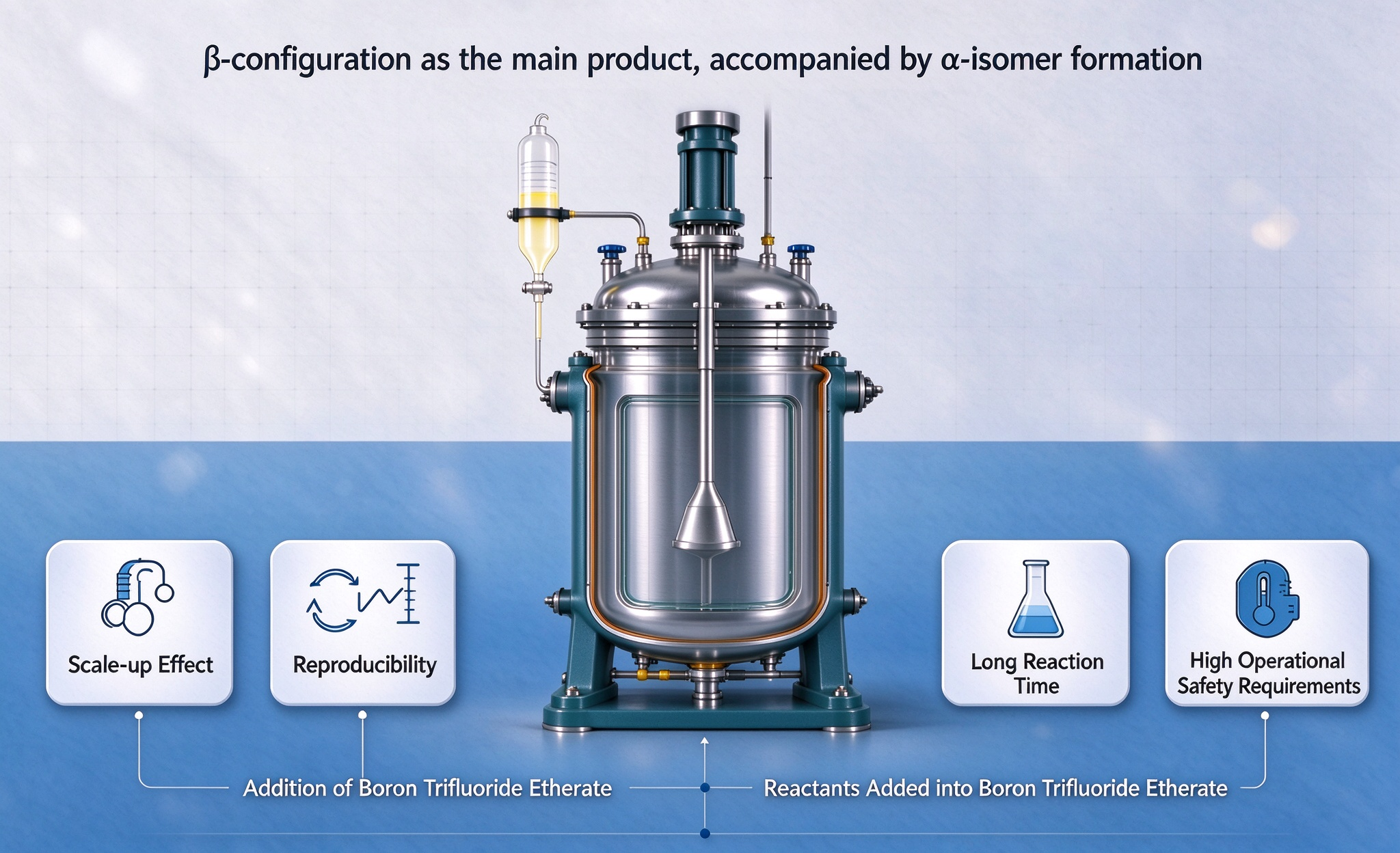
The reaction yields the β-configured product as the main product, while the α-isomer is formed as a by-product. For the conventional batch process, whether boron trifluoride diethyl etherate is added dropwise or the reactants are dropped into boron trifluoride diethyl etherate, the following issues need to be considered:
- Scale-up EffectBatch reactors have limited mass and heat transfer efficiency. During scaled-up production, the reaction heat cannot be removed rapidly, and local overheating tends to trigger side reactions, resulting in an increased isomer ratio and reduced product purity.
- Reaction Reproducibility The dropwise addition process is greatly affected by human factors and operating conditions, making it difficult to guarantee consistent quality between batches.
- Long Reaction Time The conventional process usually requires the reaction to proceed at low temperatures (e.g., -10 °C to 0 °C) for several hours or longer. For instance, the reaction time disclosed in Patent CN104478839A is 8 hours.
- High Operational Safety Requirements The synthetic route of dapagliflozin involves Grignard reagent preparation, low-temperature reactions with butyllithium, and the use of boron trifluoride diethyl etherate, imposing stringent requirements on equipment conditions, operation control and risk management.
II. Microchannel Continuous Flow: Precise Control of Reaction Conditions
To address the above process issues, the
microchannel continuous flow scheme converts batch reactions into
continuous-flow operations by virtue of the large specific surface area and
high-efficiency heat and mass transfer performance of the reactor, which
facilitates the control of reaction temperature, feed ratio and residence time.
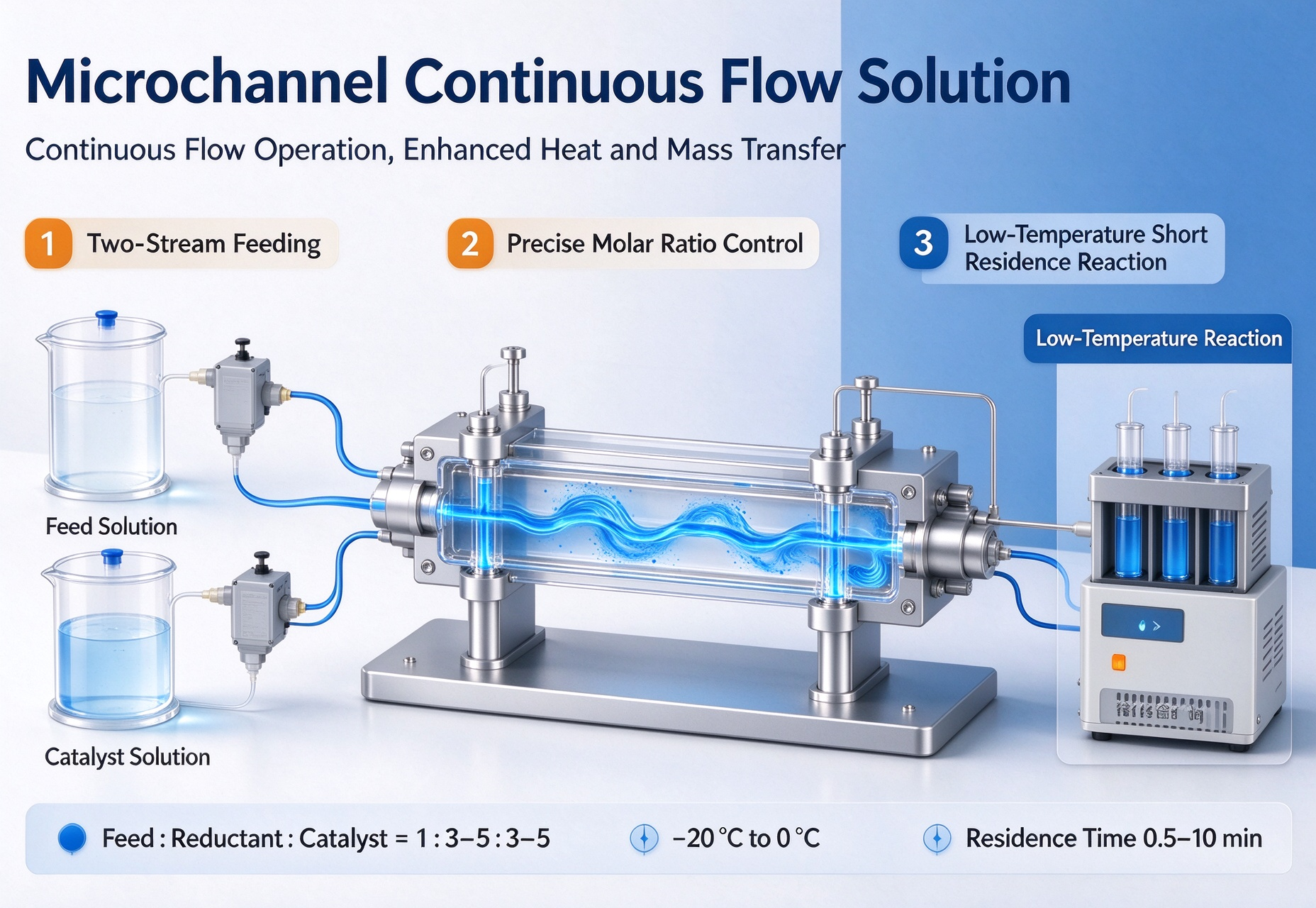
The reaction route of this method is as
follows: using
2-chloro-5-(1-methoxy-D-glucopyranos-1-yl)-4'-ethoxydiphenylmethane as the
starting material, a liquid-liquid two-phase reduction reaction is carried out
in a microchannel reactor. The main operating steps are as follows:
1. Prepare the starting material solution. Mix the acetonitrile solution of the starting material with the reducing agent (triethylsilane and/or triisopropylsilane) and load the mixture into the first storage tank.
2. Prepare the catalyst solution. Dissolve the Lewis acid catalyst boron trifluoride diethyl etherate in acetonitrile and load it into the second storage tank.
3. Continuous feeding. Pump the two streams simultaneously into the microchannel reactor via metering pumps at an accurate molar ratio (starting material : reducing agent : catalyst = 1 : 3–5 : 3–5).
4. Low-temperature reaction. The reaction temperature is controlled from −20 °C to 0 °C, preferably −15 °C to −5 °C; the residence time is extremely short, ranging from 0.5 to 10 minutes, preferably 0.5 to 5 minutes.
III. Batch Reactor vs. Microchannel Continuous Flow: Comparison of Process Differences
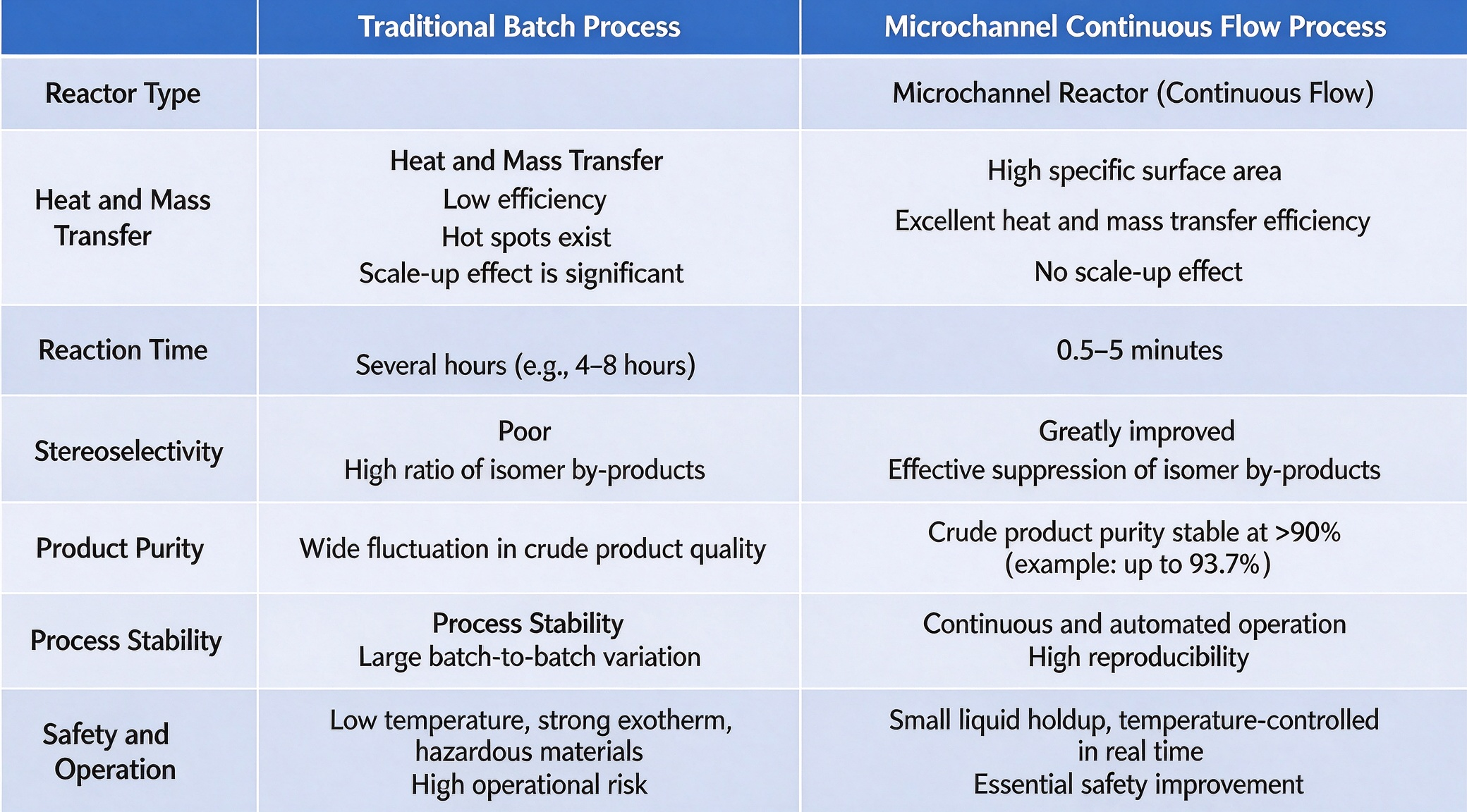
From the perspective of process development, microchannel continuous flow delivers more than just reduced reaction time. In the example above, the purity of crude dapagliflozin reached 93.7%, indicating that efficiency and selectivity can be improved simultaneously with precise control of reaction temperature, feed ratio and residence time.
For continuous flow processes to move from laboratory testing to pilot trials and industrial production, other factors must be considered, including reactor configuration, flow range, heat exchange capacity, material compatibility, automatic control, and integration with downstream processing. The temperature, feed ratio and residence time determined at the experimental stage also require verification and adjustment during scale-up.
Shenshi MicroSmart provides full-process EPC services in the continuous flow sector, covering consultation and evaluation, lab-scale process development, industrial design, skid-mounted equipment fabrication, industrial commissioning and other phases. It also offers a range of supplementary services related to continuous flow process development, such as analysis of key process parameters, flow resistance and heat transfer calculation, and microchannel reactor selection.
About Shenshi
Founded in 2005, Hangzhou Shenshi Energy Conservation Technology Co., Ltd. (SHENSHI) is a high-tech enterprise specializing in energy-efficient heat transfer and microreaction technologies. As a pioneer in low-carbon thermal management, Shenshi designs and manufactures high-performance heat exchangers serving industries such as energy, marine & offshore engineering, and hydrogen.