
Shenshi Delivers High-COP Commercial Modular Chillers: Boosting HVAC Efficiency for EK/GUOXIANG
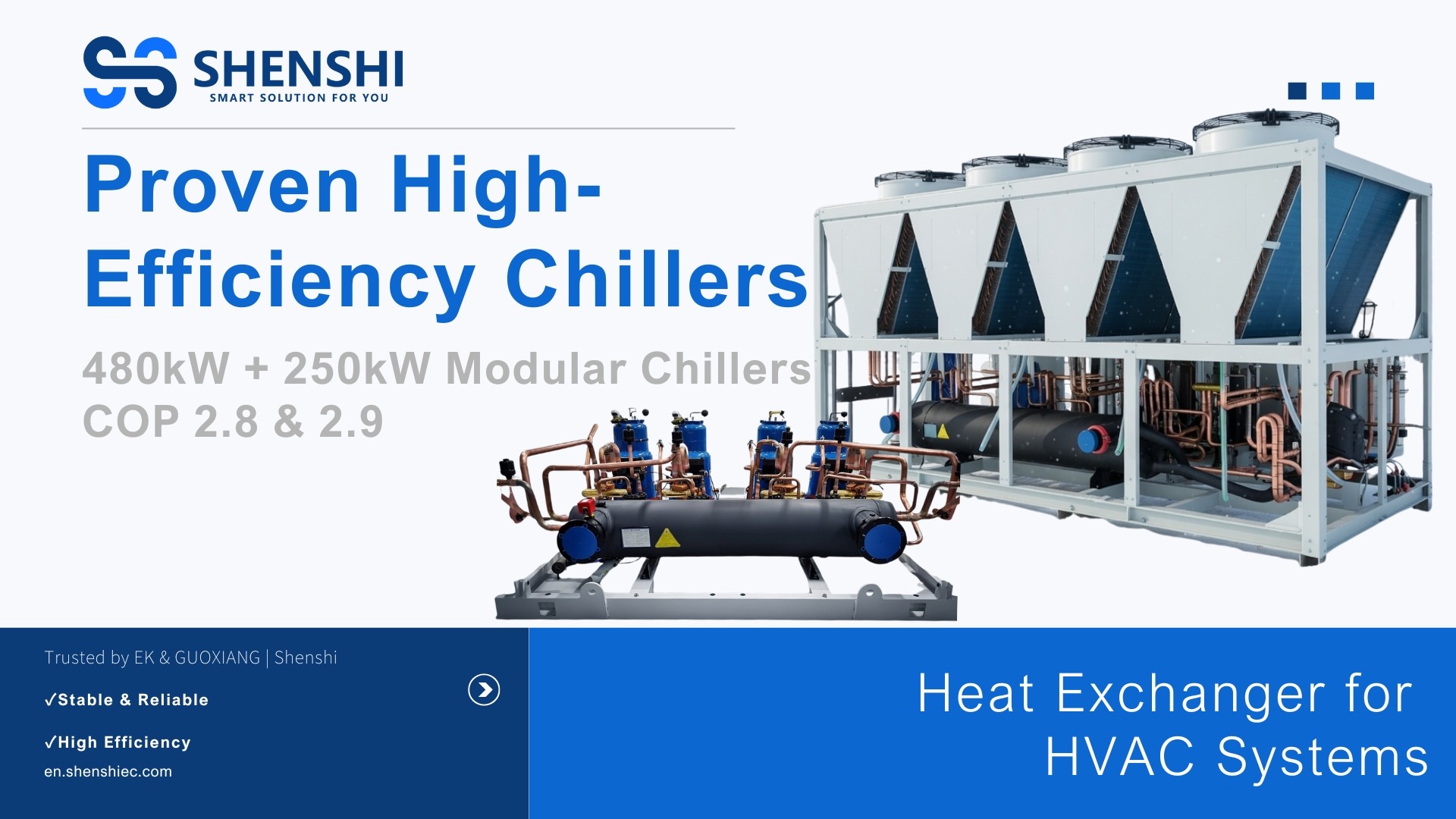
Shenshi Delivers High-COP Commercial Modular Chillers: Boosting HVAC Efficiency for EK/GUOXIANG
In today's competitive business landscape, building managers and industrial operators are under constant pressure to reduce operational costs while maintaining optimal environmental conditions. Energy consumption from Heating, Ventilation, and Air Conditioning (HVAC) systems represents a significant portion of a commercial building's expenses. Therefore, investing in commercial HVAC efficiency solutions is no longer a luxury but a critical business strategy. This article explores how to achieve superior energy efficiency, focusing on high Coefficient of Performance (COP) systems and drawing insights from a real-world success story.
The Core Challenge: Why Commercial HVAC Efficiency Matters More Than Ever
The demand for high-efficiency HVAC systems is driven by a convergence of factors. Escalating energy prices, stricter environmental regulations, and a growing corporate responsibility to embrace sustainability are pushing businesses to seek smarter, more efficient solutions. An inefficient HVAC system not only inflates utility bills but can also lead to inconsistent temperatures, poor air quality, and frequent breakdowns, impacting employee productivity and tenant satisfaction.
At the heart of measuring HVAC performance is the Coefficient of Performance (COP). In simple terms, COP is the ratio of useful heating or cooling provided to the work required. A higher COP value indicates a more efficient system. For facility managers, understanding and optimizing for a higher COP is a direct path to significant energy savings and a lower carbon footprint.
A Case Study in Success: Achieving High-Efficiency Cooling for EK/GUOXIANG
To illustrate the tangible benefits of a well-executed efficiency strategy, let's examine a recent project with EK/GUOXIANG, a prominent player in the commercial HVAC industry. The client needed a reliable and powerful commercial modular chiller that could deliver stable cooling without compromising on energy efficiency.
The Solution: Custom Engineering with Best-in-Class Components
Our approach was to engineer a bespoke solution centered around proven, high-performance components. The core of this custom commercial modular chiller was a Copeland compressor, a brand synonymous with reliability and efficiency in the HVAC world. We knew that to handle demanding commercial applications, the compressor had to be robust and capable of performing under high-load conditions.
To complement the compressor, we integrated a high-efficiency shell-and-tube heat exchanger. This type of heat exchanger is ideal for commercial use due to its durability and effectiveness in transferring heat. However, the true success of the project hinged on optimized system matching. It wasn't enough to just use quality parts; they had to work in perfect harmony. Our engineering team meticulously designed the system to ensure every component was perfectly sized and calibrated to work together, maximizing overall HVAC system efficiency.
The Results: Exceeding Expectations with Impressive COP Ratings
The outcome of this tailored approach was remarkable. We successfully delivered two chiller units with cooling capacities of 480kW and 250kW. More impressively, these units achieved COP ratings of 2.8 and 2.9, respectively. These figures represent a significant improvement in energy efficiency compared to many standard commercial systems, directly addressing the client's need for a high-performance, cost-effective cooling solution.
Key Strategies for Optimizing Your Commercial HVAC System's Efficiency
Achieving results like the ones in our case study requires a strategic approach. Here are the key pillars of creating a truly energy-efficient HVAC system.
Strategy 1: The Heart of the System - Selecting the Right Compressor
The compressor is arguably the most critical component of an HVAC system, consuming the most energy. The choice of compressor has a profound impact on both performance and efficiency. For Copeland compressor commercial HVAC applications, the benefits are clear: they are engineered for durability, offer superior performance under partial and full loads, and incorporate advanced technologies to maximize energy savings. When evaluating compressors, look beyond the initial cost and consider the total cost of ownership, including energy consumption and maintenance.
Strategy 2: Maximizing Heat Transfer with Advanced Heat Exchangers
The heat exchanger is where the critical heat transfer process occurs. The efficiency of this component directly influences the system's overall COP. Shell-and-tube heat exchangers are a popular choice for commercial systems due to their robust construction and ability to handle high pressures. Modern designs incorporate features like enhanced tube surfaces to maximize the heat transfer area, further improving the efficiency of the refrigeration cycle.
Strategy 3: The Power of Synergy - Optimized System Matching
As demonstrated in the EK/GUOXIANG project, simply using high-quality components is not enough. HVAC system optimization is about ensuring all parts of the system—the compressor, heat exchanger, evaporator, and controls—are selected and integrated to work together seamlessly. A system that is not properly matched can lead to an overworked compressor, reduced efficiency, and a shorter equipment lifespan. This is where expert engineering and design play a crucial role.
Beyond the Hardware: Maintenance and Operational Best Practices
Investing in a high-efficiency HVAC system is the first step. To maintain peak performance and efficiency throughout its lifespan, a proactive maintenance strategy is essential. Neglecting maintenance can lead to a gradual decline in efficiency, erasing the gains from your initial investment.
Furthermore, integrating your HVAC system with a modern Building Automation System (BAS) can unlock another level of efficiency. A BAS can implement advanced control strategies, such as demand-controlled ventilation and temperature setbacks during unoccupied hours, to further reduce energy consumption without sacrificing comfort.
Calculating the ROI of a High-Efficiency HVAC Upgrade
The upfront cost of a high-efficiency commercial HVAC system can be higher than a standard system. However, the long-term financial benefits often result in a compelling return on investment (ROI). When calculating the ROI, consider the following:
- Energy Savings: Compare the projected annual energy consumption of the new system with your current system.
- Rebates and Incentives: Many utility companies and government agencies offer financial incentives for installing energy-efficient equipment.
- Reduced Maintenance Costs: Newer, more reliable systems typically require less frequent and less costly repairs.
- Improved Asset Value: A building with a high-efficiency HVAC system is more attractive to potential tenants and buyers.
Conclusion
Boosting commercial HVAC efficiency is a multifaceted endeavor that pays significant dividends in the form of lower operating costs, enhanced reliability, and a commitment to environmental stewardship. As demonstrated by the successful project for EK/GUOXIANG, the right strategy involves a holistic approach that combines best-in-class components like Copeland compressors, advanced heat exchangers, and meticulous system design. By prioritizing high-COP solutions and committing to regular maintenance, businesses can ensure their cooling and heating systems are powerful, reliable, and, most importantly, highly efficient.
About Shenshi
Founded in 2005, Hangzhou Shenshi Energy Conservation Technology Co., Ltd. (SHENSHI) is a high-tech enterprise specializing in energy-efficient heat transfer and microreaction technologies. As a pioneer in low-carbon thermal management, Shenshi designs and manufactures high-performance heat exchangers and micro-reactors serving industries such as energy, marine & offshore engineering, hydrogen, pharmaceuticals, and advanced manufacturing.
With solutions deployed across more than 40 countries, Shenshi is committed to delivering reliable, efficient, and sustainable thermal technologies for demanding industrial applications.