Why Incidents Still Happen After Batch-to-Continuous Flow Retrofits? Hidden Risk Gaps in High-Hazard Process Overhauls
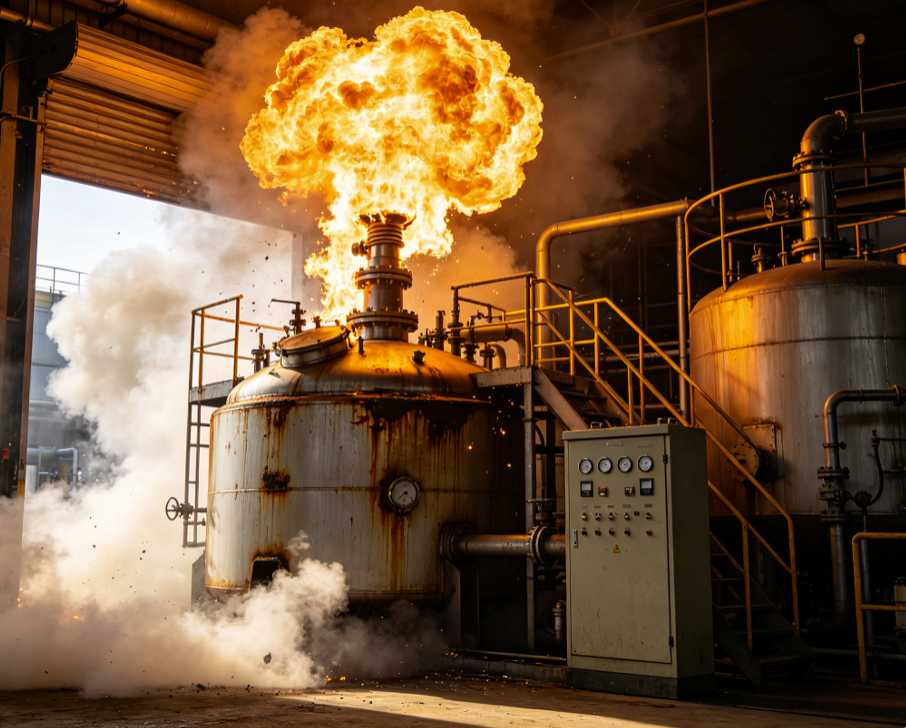
Recently, the Alxa League Administrative Office of Inner Mongolia released the official investigation report on the March 19 general explosion accident at Inner Mongolia Liyuan Technology Co., Ltd. The enterprise converted its 3,5-dinitrobenzoic acid production line from batch reactors to tubular continuous flow equipment. However, it failed to conduct comprehensive safety risk identification on by-products and lacked robust management throughout the process modification phase—ultimately triggering a catastrophic accident. 
The investigation further revealed the explosion did not originate from the newly installed tubular continuous flow unit, but from aged batch reactors and intermediate holding tanks retained during the retrofit. Solid materials containing high-energy polynitrophenol compounds lose stability under acidic environments. Ignition occurred due to friction and impact, with flames propagating through pipelines and triggering thermal decomposition and detonation of bulk materials.
Companies tend to fixate solely on the mechanical switch from batch kettles to tubular reactors, leaving critical blind spots in the management and disposal of legacy aging equipment. If continuous flow transformation fails to implement closed-loop risk control across every single node of the full production workflow, safety upgrades will inevitably carry unaddressed vulnerabilities.
Any adjustment to a production route, reaction conditions or equipment configuration—whether shifting from batch to continuous flow or tweaking existing setups—qualifies as a process change. Such modifications reshape core variables including process parameters, heat and mass transfer performance, material physical states and automated control logic. Corresponding risk assessment and engineering validation must be updated in lockstep with every alteration.
Continuous flow technology has gained widespread traction across pharmaceutical and fine chemical manufacturing over recent years, driving countless manufacturers to pursue continuous production upgrades. Beyond merely swapping hardware, this transition demands profound overhauls to process organization and engineering execution protocols. Stable, long-cycle industrial operation hinges on thorough preliminary data accumulation and rigorous engineering design—two critical phases whose value is consistently underappreciated during project delivery.
Disconnect Between Process R&D and Engineering Design Creates Major Hazards
Continuous flow industrialization follows a standard staged roadmap: technical feasibility assessment, lab-scale process development, pilot plant validation, industrial engineering design, equipment fabrication, on-site commissioning and startup.
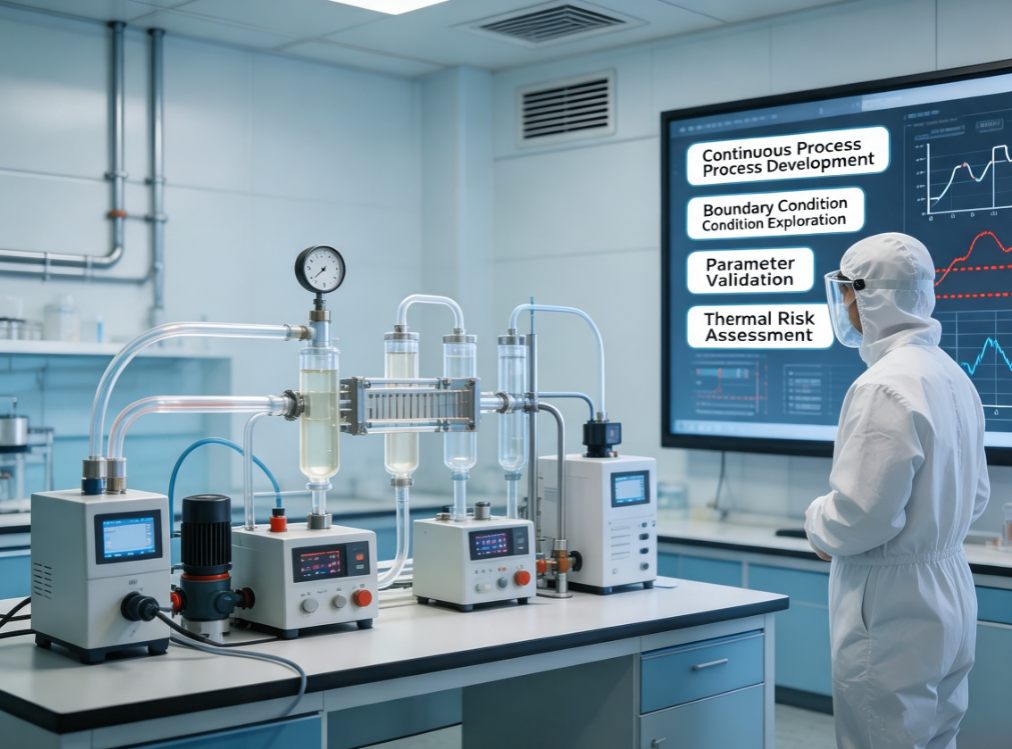
This phased, iterative development framework is non-negotiable for all high-hazard chemical processes. Boundary condition testing, lock-in of critical process parameters, repeatability verification and industrial-scale heat release calculations directly govern process stability, as well as downstream equipment sizing and safety control architecture. Once full-scale construction commences, on-site flexibility to adjust core design is extremely limited. The more robust upfront testing and data validation are, the smoother engineering deployment proceeds.
Conclusions drawn during technical evaluation guide core process route selection; datasets generated at lab scale serve as the foundational input for industrial design; finalized engineering drawings then inform equipment manufacturing, system integration and field tuning. Data is iteratively refined across every stage to deliver validated benchmarks for subsequent project phases.
Complete All Foundational Technical Work Prior to Equipment Fabrication
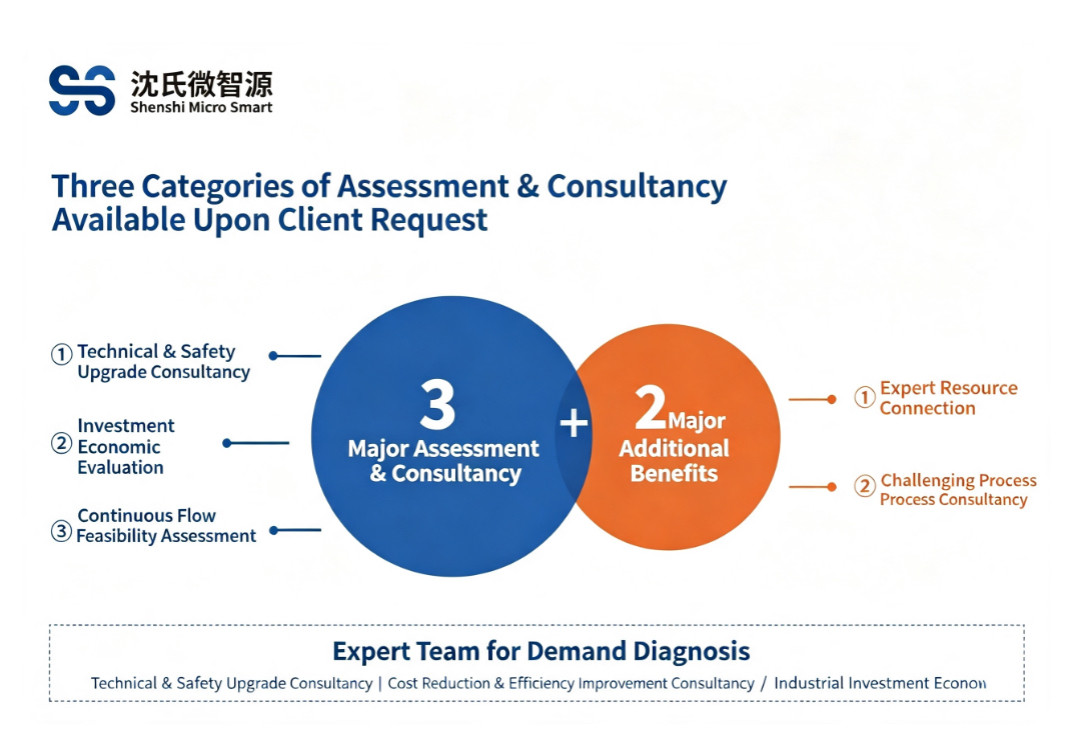
Guided by this rigorous engineering logic, Shenshi Microfluidics initiates all continuous flow projects with three core evaluation pillars: safety upgrade technical viability, capital investment economic analysis, and compatibility matching between continuous flow technology and the target synthesis route. This framework empowers clients to clarify technical feasibility and full cost bandwidth at the earliest project stage.
Upon entering lab-scale process development, lab validation and industrial design preparation advance in parallel. Teams simultaneously complete feasibility screening, extreme operating boundary exploration and critical parameter optimization, while carrying out supporting engineering analysis: key parameter quantification, full-scale flow resistance & heat exchange modeling, and customized reactor sizing & selection. This synchronized workflow eliminates data gaps between lab experimental results and full-scale engineering blueprints.
Once process development and design validation are fully completed, equipment manufacturing and delivery move forward. All units are pre-integrated into skid-mounted modules for streamlined delivery, installation and on-site debugging. Professional technical teams oversee trial material feeding, production commissioning and standardized operator training, creating a seamless handover from equipment delivery to stable commercial operation. End-to-end project delivery typically spans 4 to 8 months.
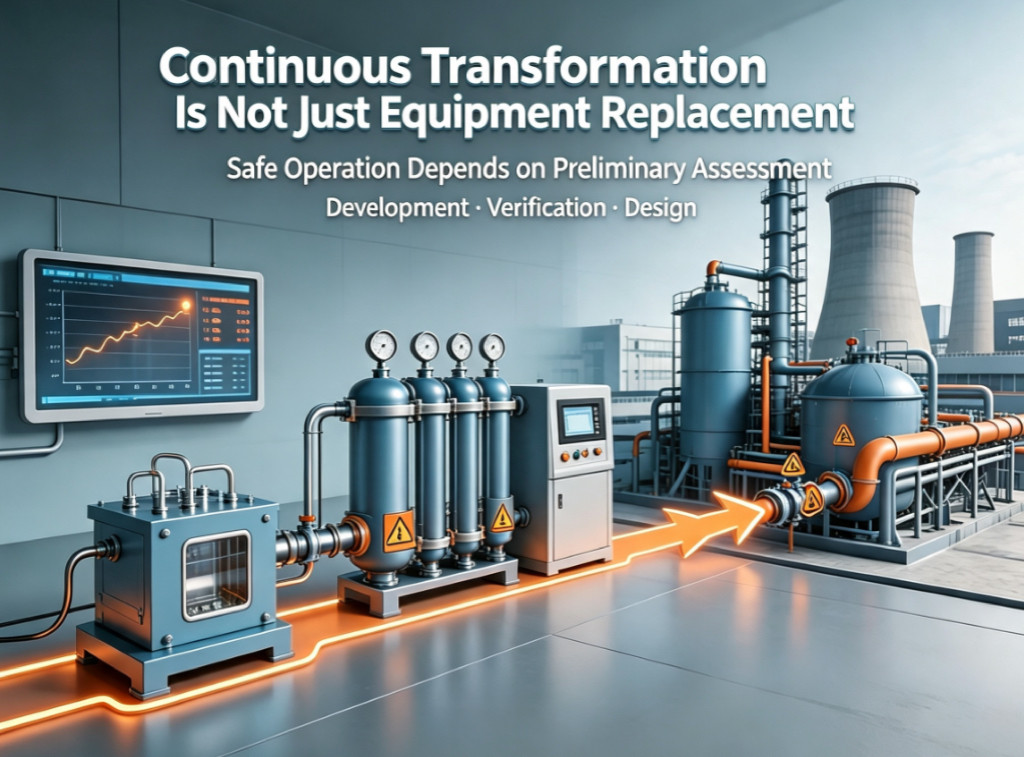
Every stage of continuous flow transformation relies on systematic hazard analysis and technical validation as its foundational backbone. Tubular reactors, microchannel reactors and other continuous flow hardware are merely technical enablers. The long-term safe, reliable operation of any production line ultimately hinges on the depth and rigor of pre-fabrication work: multi-layered technical assessment, iterative lab development and fully validated engineering design.